Antique Japanese Two-Section Isho Tansu, Meiji Period, 1868-1911
Rest. & Insp. by: Harada in Japan
SKU: 26J-B025
$2,800.00



 International Shipping Notice
 How We Pack Your Tansu
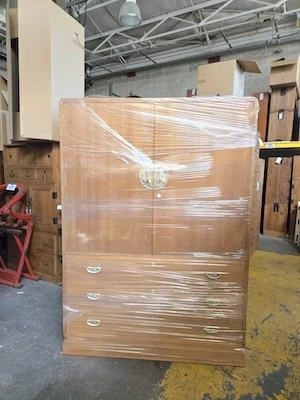
Each piece is carefully inspected, cleaned, and wrapped with protective plastic wrap.
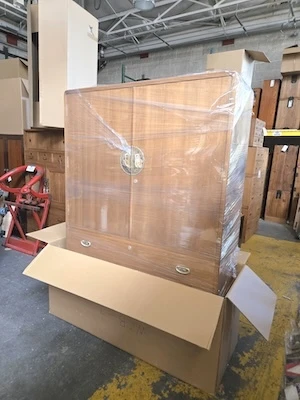
Styrofoam padding is placed at the bottom of the box, and the tansu is carefully positioned on top.
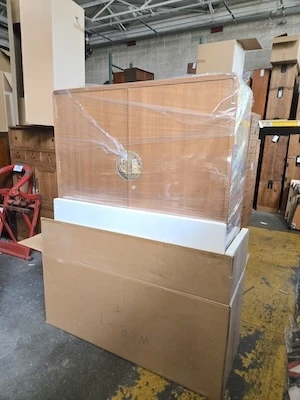
Additional Styrofoam is added around the tansu to protect all sides.
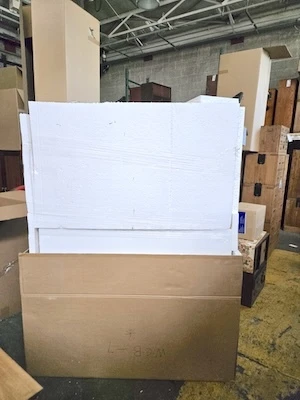
The piece is fully surrounded with Styrofoam and enclosed securely in a box.
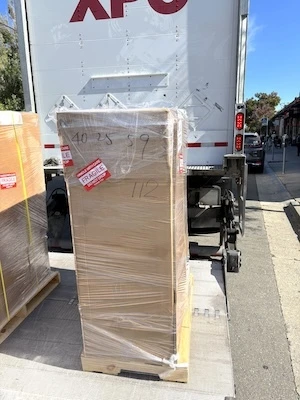
The boxed item is placed on a pallet and secured with poly banding straps for safe transport.
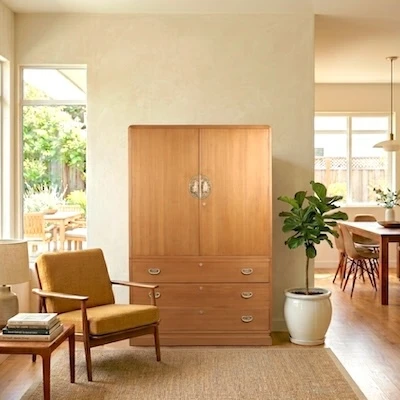
Arrives safely, ready to add warmth, history, and Japanese craftsmanship to your space.

A long, rectangular Meiji-era wooden letter box with fitted lid, interior drawer, and a concealed compartment tucked behind the end panel.
This antique Japanese fubako is a slender wooden letter box made for storing correspondence and papers in an orderly, protected form. Its elongated body is topped by a fitted lid, and one end is finished with a recessed iron ring pull set into a panel that presents as a small exterior drawer front. The warm brown surface shows a deep, time-softened patina with visible wear at the edges and corners, giving the piece the understated character so admired in Japanese utilitarian antiques.
The most intriguing feature is its internal arrangement. With the lid open, a small removable wooden drawer sits just inside the upper end of the box, and behind the end panel is a hidden compartment concealed from the exterior view. This layered construction suggests a box made for organizing letters, documents, or personal papers while keeping select contents discreetly tucked away. Long, clean lines and practical joinery make it a compelling example of functional Japanese storage from the Meiji period.
Today, this antique fubako makes a refined decorative object for a study, library, or writing desk. It can be used to hold stationery, keepsakes, photographs, or other small personal items, while the concealed compartment adds an element of curiosity that collectors especially appreciate. Its simple form works beautifully in wabi-sabi, rustic, and Japandi-inspired interiors.
A quietly ingenious Meiji-period fubako, combining straightforward craftsmanship with the charm of concealed storage.
We use professional studio lighting to highlight the natural character of the wood. As a result, the tone may appear slightly warmer than under natural daylight.
All antique items are sold as-is. Each piece may exhibit signs of age, including scratches, wear, or minor imperfections. These are not considered defects but natural evidence of the item’s authenticity and age.
Rest. & Insp. by: Harada in Japan
SKU: 26J-B025


SKU: 24N-203-12