


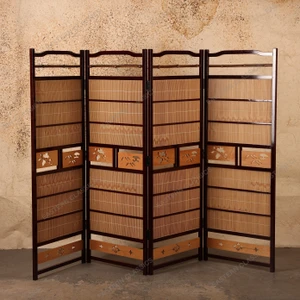
Vintage Japanese Bamboo Folding Screen (Tsuitate), Late Showa 1966-1989 | SKU: 26J-0661
SKU: 26J-0661
Sold Out




 International Shipping Notice
 How We Pack Your Tansu
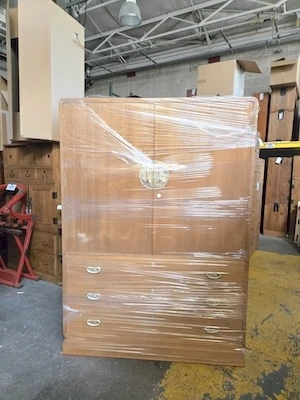
Each piece is carefully inspected, cleaned, and wrapped with protective plastic wrap.
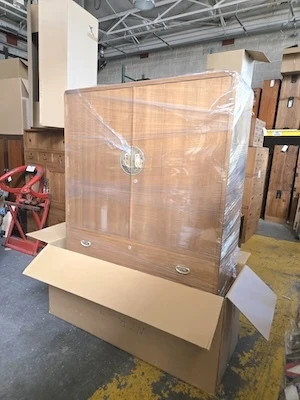
Styrofoam padding is placed at the bottom of the box, and the tansu is carefully positioned on top.
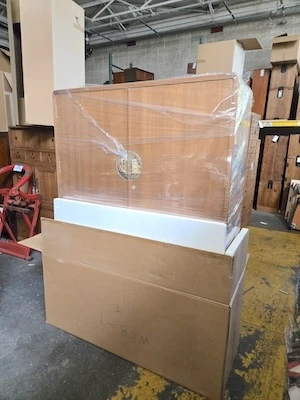
Additional Styrofoam is added around the tansu to protect all sides.
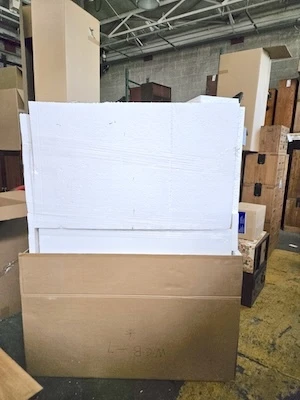
The piece is fully surrounded with Styrofoam and enclosed securely in a box.
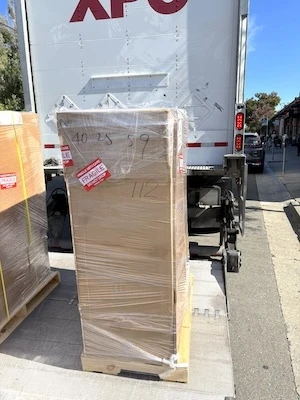
The boxed item is placed on a pallet and secured with poly banding straps for safe transport.
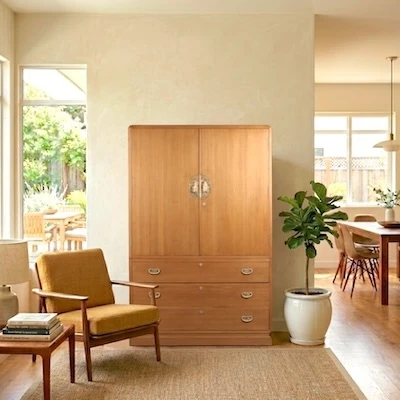
Arrives safely, ready to add warmth, history, and Japanese craftsmanship to your space.

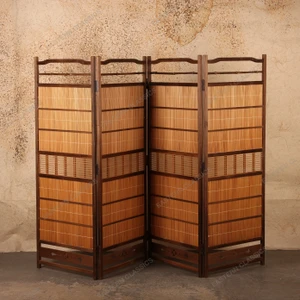
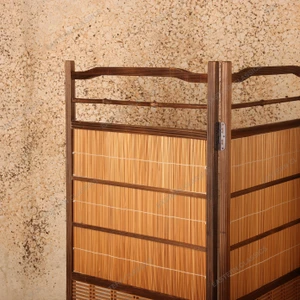
A two-panel hinged kumiko folding screen showcasing asanoha and hishi geometric latticework in warm, straight-grained wood.
Kumiko is the centuries-old Japanese woodworking art of interlocking thin wood strips into precise geometric patterns without nails or glue -- a craft demanding exceptional skill and patience. This two-panel hinged screen displays that tradition beautifully, with open lattice grids framing decorative bands of asanoha (hemp leaf) and hishi (diamond) kumiko motifs at the upper and lower registers of each panel. The fine, straight grain of the pale wood -- consistent with sugi (Japanese cedar) or a similar light-toned softwood -- has mellowed to a warm honey tone, and the crisp joinery throughout speaks to careful, handcrafted Japanese construction. The shared top rail and metal hinge connecting the two panels suggest this piece may have been adapted from an architectural setting -- perhaps fitted above sliding doors as a ranma transom -- or purpose-built as a freestanding screen. Either way, it stands as a fine example of vintage Japanese craft.
In a modern home, this kumiko screen brings instant Japandi style to any space. Stand it in a living room corner as a sculptural accent, lean it against a bedroom wall as a light-filtering headboard alternative, or use it as a subtle entryway divider that preserves airflow and sightlines while defining zones. The open lattice casts beautiful shadow patterns when placed near a light source, making it equally at home as a statement piece in a minimalist decor setting or a home office backdrop. Its compact two-panel format means it is easy to move and reposition -- a versatile and unique gift for collectors of Japanese vintage furniture and Japanophiles alike.
A rare and collectible example of handcrafted Japanese kumiko woodworking -- bringing wabi-sabi warmth and timeless geometric artistry to any modern interior.
We use professional studio lighting to highlight the natural character of the wood. As a result, the tone may appear slightly warmer than under natural daylight.
All vintage items are sold as-is. Each piece may exhibit signs of age, including scratches, wear, or minor imperfections. These are not considered defects but natural evidence of the item’s authenticity and age.
SKU: 26J-0661
SKU: 26J-0769


SKU: 26J-0764
