







 International Shipping Notice
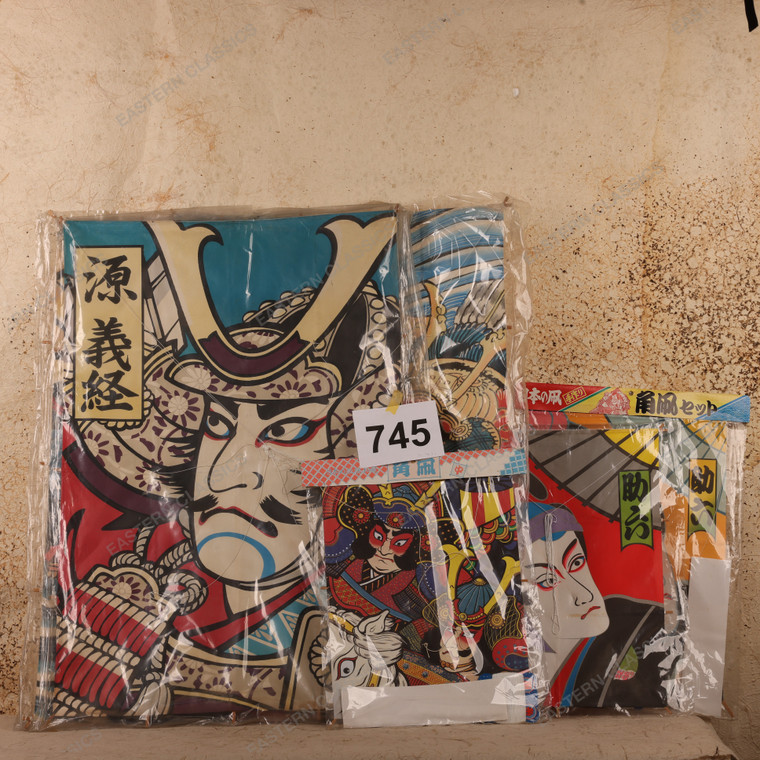
A bold set of large-format Japanese paper kites depicting legendary samurai scenes -- striking collector pieces and dramatic wall hangings for any interior.
A tako is a traditional Japanese kite, and the large decorative samurai kite is one of the most celebrated forms of Japanese folk art. These three large-format paper kites each carry a different dramatic scene rooted in Japanese legend and warrior history. The first bears the name Minamoto no Yoshitsune -- the beloved 12th-century general -- rendered in vivid kabuki-inspired brushwork with bold teal, red, and cream. The second depicts a battle scene identified as Funa Benkei, the famous noh play in which the warrior monk Benkei faces sea spirits amid crashing waves. The third illustrates the Battle of Ujigawa, a celebrated clash from the Genpei War, showing armored warriors on horseback amid dynamic wave patterns. Each kite is printed or hand-painted on washi-style paper stretched across a bamboo frame, with kite strings still attached. The bold linework and vivid period palette reflect the printing and craft aesthetics of Late Showa Japan, when regional kite-making workshops were still producing these large decorative examples for festivals and collectors alike.
Today, these vintage Japanese samurai kites make extraordinary statement pieces for a modern home, gallery, or studio. Displayed flat against a wall, they function as oversized Japanese wall art -- equally compelling in a living room accent wall, a home office, or an entryway. Their large scale and bold ukiyo-e-inspired imagery pair beautifully with Japandi style interiors, wabi-sabi aesthetic spaces, or any eclectic setting that welcomes bold vintage art. A rare and unique gift for collectors of Japanese vintage pieces, Japanophiles, or anyone who appreciates handcrafted Japanese folk craft.
A rare set of handcrafted Japanese samurai kites -- bold, historic, and utterly unique as vintage Japanese wall art for the modern collector.
We use professional studio lighting to highlight the natural character of the wood. As a result, the tone may appear slightly warmer than under natural daylight.
All vintage items are sold as-is. Each piece may exhibit signs of age, including scratches, wear, or minor imperfections. These are not considered defects but natural evidence of the item’s authenticity and age.


