






 International Shipping Notice
 How We Pack Your Tansu
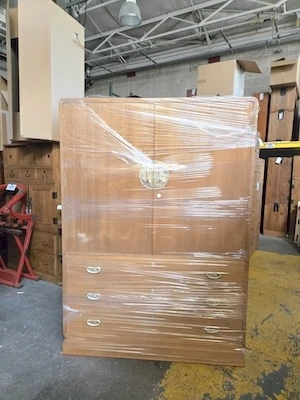
Each piece is carefully inspected, cleaned, and wrapped with protective plastic wrap.
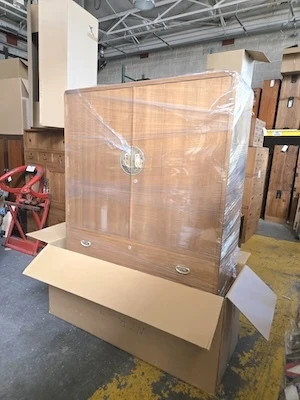
Styrofoam padding is placed at the bottom of the box, and the tansu is carefully positioned on top.
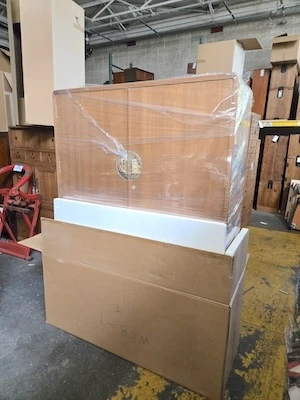
Additional Styrofoam is added around the tansu to protect all sides.
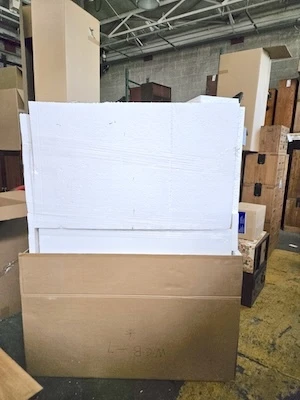
The piece is fully surrounded with Styrofoam and enclosed securely in a box.

The boxed item is placed on a pallet and secured with poly banding straps for safe transport.
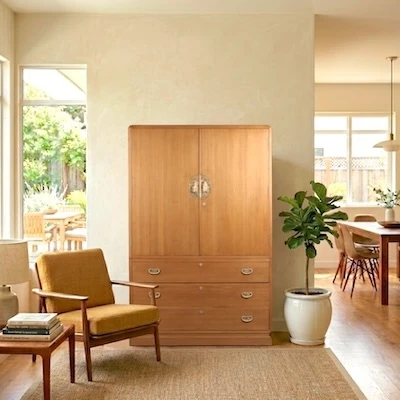
Arrives safely, ready to add warmth, history, and Japanese craftsmanship to your space.
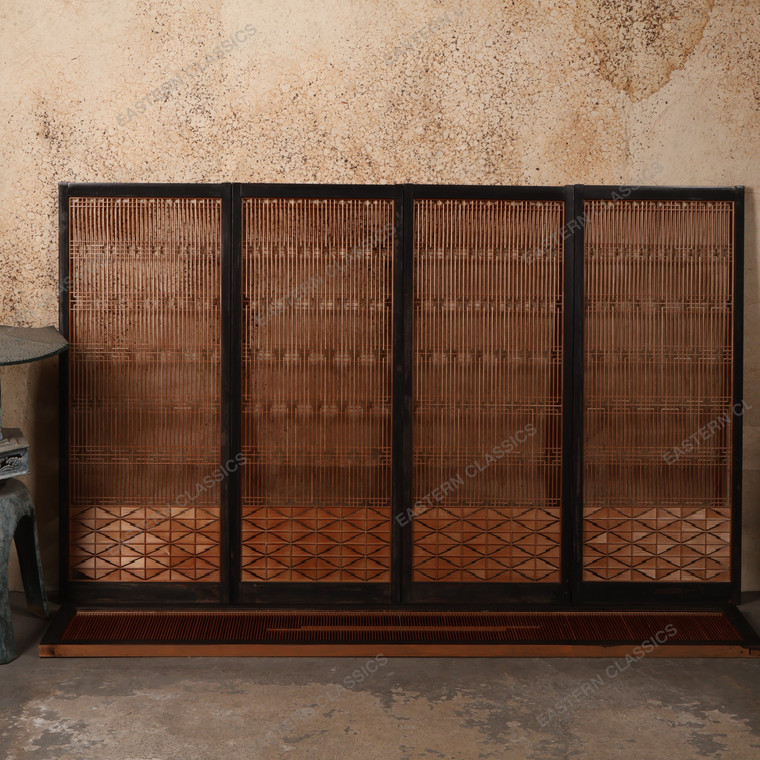
A four-panel ranma screen of exceptional craftsmanship, showcasing intricate kumiko latticework and a boldly carved kasane diamond border -- a rare architectural treasure from postwar Japan.
A ranma is a traditional Japanese transom panel, historically fitted above sliding doors or between rooms in temples, machiya townhouses, and refined private residences to allow light and air to circulate while maintaining a sense of spatial division. This handsome four-panel example -- presented complete with its original floor track -- displays two distinct woodworking techniques in a single composition: the upper portion features fine tate-goshi vertical reed latticework punctuated by layered geometric interlocks in the classic kumiko tradition, while the lower register is filled with boldly carved diamond-and-lightning-bolt kasane fretwork rendered in pale, close-grained hardwood. Each panel is set within a substantial ebonised wood outer frame, the dark lacquer providing a striking contrast against the warm amber tones of the inner joinery. The craftsmanship -- particularly the precision of the kumiko grid with its interlocking horizontal accent bands -- speaks to the work of a skilled specialist joiner working in the early postwar period, when traditional architectural woodcraft was still very much alive in Japan.
Today, this set of vintage Japanese ranma panels offers remarkable versatility for the modern interior. Stood upright as a freestanding room divider, the open lattice allows light to filter through while elegantly separating a living room, home office, or bedroom zone -- a perfect expression of the wabi-sabi aesthetic and Japandi style. Mounted horizontally on a wall, the panels make a dramatic statement as oversized architectural wall art, bringing warmth and handcrafted texture to a minimalist decor scheme. The complete floor track adds authenticity and makes display straightforward without wall mounting. A genuinely unique housewarming gift or collector's statement piece for anyone drawn to vintage Japanese craft and architectural salvage.
A rare and collectible piece of vintage Japanese architectural craft -- these kumiko ranma panels bring the refined geometry of traditional Japanese joinery directly into the modern home.
We use professional studio lighting to highlight the natural character of the wood. As a result, the tone may appear slightly warmer than under natural daylight.
All vintage items are sold as-is. Each piece may exhibit signs of age, including scratches, wear, or minor imperfections. These are not considered defects but natural evidence of the item’s authenticity and age.


SKU: 26M-663-2
