
Free Shipping






Do you like this piece?
We’ll let you know when we have a similar item.
 Notify me about similar pieces
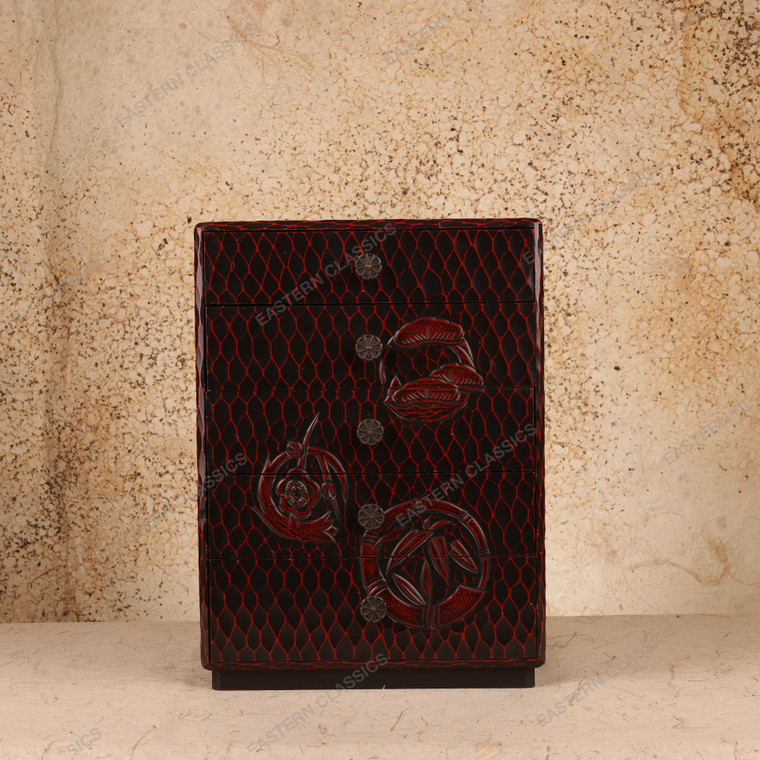
A dramatically lacquered Japanese small chest with hand-carved botanical motifs and a rich two-tone urushi-style finish -- a rare find in vintage Japanese craft.
A ko-tansu is a compact Japanese storage chest, traditionally used to organize personal belongings such as correspondence, accessories, and small valuables. This striking example dates to the Mid Showa period (1946-1965) and is finished in a deep black-over-red lacquer -- a technique in which red undercoat is selectively revealed through the black surface, creating dramatic contrast across every surface. The exterior is hand-tooled with an all-over tortoiseshell or fish-scale (uroko) pattern, while the drawer fronts feature bold raised carvings of auspicious botanicals -- peony blossoms, bamboo roundels, and leafy sprays -- rendered in vivid crimson relief. Small cast metal rosette pulls, darkened with age, anchor each drawer. The unfinished interior of each drawer reveals pale natural wood, likely kiri (paulownia), consistent with Japanese tansu construction of the era. The overall craftsmanship reflects the postwar revival of decorative lacquerwork as a domestic art form.
In a modern home, this vintage Japanese ko-tansu is as functional as it is eye-catching. Placed on a dresser or vanity, it makes a stunning jewelry box or accessories organizer -- its multiple smooth-sliding drawers ideal for rings, earrings, cufflinks, and keepsakes. On a home office desk it doubles as a stylish desktop organizer for stationery, cards, and small supplies. Its bold wabi-sabi aesthetic and lacquer drama also make it a compelling standalone accent piece for a living room shelf or entryway console display, adding an authentic Japandi-inspired focal point. A truly unique gift for collectors of Japanese vintage furniture or anyone who appreciates handcrafted Japanese decorative objects.
A boldly decorative piece of vintage Japanese craft, this lacquered ko-tansu brings the rich artistry of Mid Showa Japan to any modern interior.
We use professional studio lighting to highlight the natural character of the wood. As a result, the tone may appear slightly warmer than under natural daylight.
All vintage items are sold as-is. Each piece may exhibit signs of age, including scratches, wear, or minor imperfections. These are not considered defects but natural evidence of the item’s authenticity and age.


SKU: 26M-533-7

SKU: 26M-725-2
