





 International Shipping Notice
 How We Pack Your Tansu
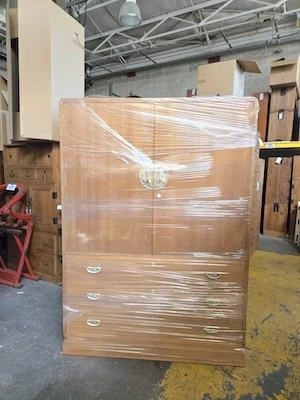
Each piece is carefully inspected, cleaned, and wrapped with protective plastic wrap.
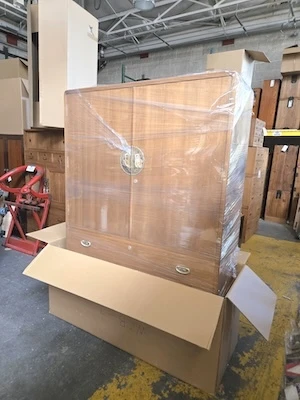
Styrofoam padding is placed at the bottom of the box, and the tansu is carefully positioned on top.
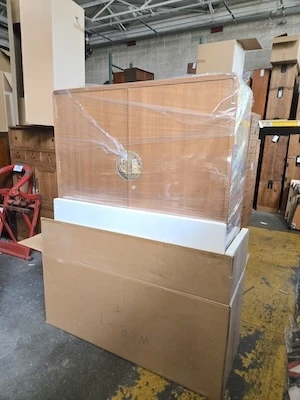
Additional Styrofoam is added around the tansu to protect all sides.
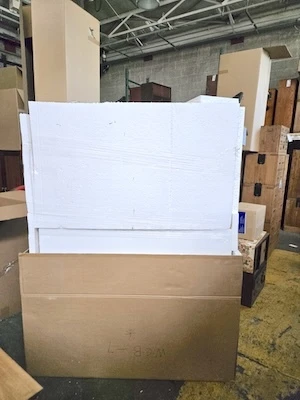
The piece is fully surrounded with Styrofoam and enclosed securely in a box.
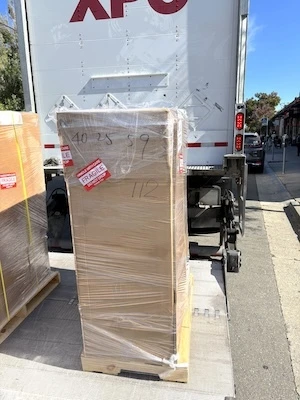
The boxed item is placed on a pallet and secured with poly banding straps for safe transport.
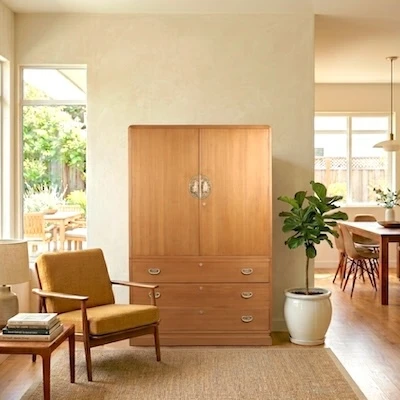
Arrives safely, ready to add warmth, history, and Japanese craftsmanship to your space.
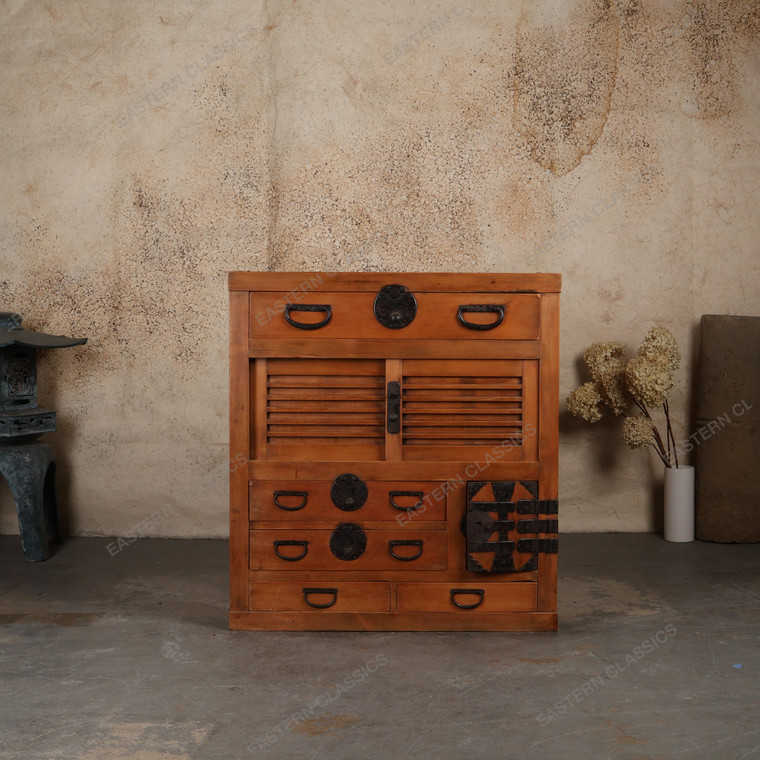
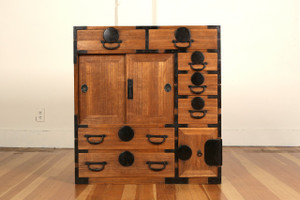
A compact and character-rich Japanese merchant chest with slatted sliding doors, multiple drawers, and bold iron fittings.
This antique Japanese choba tansu is a traditional merchant chest form, made for shop or office use with a practical arrangement of drawers and enclosed compartments for papers, valuables, and daily business storage. The facade combines a long upper drawer, a central pair of slatted sliding doors, several lower drawers of varying widths, and a small swinging iron-clad door at the lower right. Strong iron pulls, circular lock plates, and strap hardware give the piece a sturdy, architectural presence, while the plank-built sides and warm wood surface reflect its handmade character.
In a modern interior, this choba tansu works beautifully as an accent chest in an entryway, study, living room, or retail space. Its varied compartments are well suited to organizing documents, table linens, small household items, or collectibles, and its compact upright proportions make it easy to place where both storage and visual impact are desired. A distinctive antique furnishing for collectors of Japanese furniture and interiors shaped by wabi-sabi and folk craft sensibilities.
A handsome example of Japanese merchant furniture, this choba tansu brings utility, craftsmanship, and presence to a modern home.
We use professional studio lighting to highlight the natural character of the wood. As a result, the tone may appear slightly warmer than under natural daylight.
All antique items are sold as-is. Each piece may exhibit signs of age, including scratches, wear, or minor imperfections. These are not considered defects but natural evidence of the item’s authenticity and age.


Rest. & Insp. by: Yamashita in Japan
SKU: 23O-D200


Rest. & Insp. by: Yamada in Japan
SKU: 25S-D405


Rest. & Insp. by: Harada in Japan
SKU: 26M-D007
