

Do you like this piece?
We’ll let you know when we have a similar item.
 Notify me about similar pieces

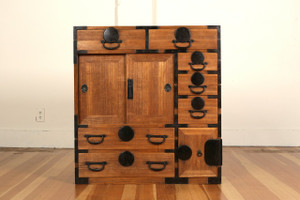
A handcrafted Japanese antique furniture piece bearing the full spirit of Meiji-era merchant life -- multiple lockable compartments, a double-door cabinet, and bold iron hardware throughout.
A choba tansu is a traditional Japanese merchant chest originally used in shop front offices -- the word "choba" referring to the raised counting platform where tradespeople managed ledgers, cash, and important documents. This example, dating to the late Meiji period (1912-1926), is constructed from kiri wood (paulownia), displaying warm honey-brown tones and a fine linear grain that has mellowed beautifully with age. The front face is organized into a practical hierarchy of storage: a wide double-door cabinet section occupying the upper left, fitted with round iron pull knobs and a central locking bar plate, alongside a column of pull-out drawers to the right and additional full-width drawers below -- each fitted with a rectangular metal drawer pull and flanked by decorative iron corner reinforcements. The ironwork throughout is hand-forged in the classic Japanese style, with shaped corner guards, lockplates, and filigree brackets that give the chest its commanding, handcrafted character. A merchant's stamp mark is visible on the top surface, a rare original touch that speaks directly to the chest's provenance as working Japanese antique furniture.
Today, this choba tansu translates effortlessly into a modern interior. Its compact, low-profile form makes it an ideal entryway console -- a place for keys, mail, and daily essentials -- while the generous drawer and cabinet storage suits a home office setting beautifully, keeping files, stationery, and electronics neatly tucked away. The warm wood tones and sculptural iron hardware pair naturally with Japandi style and wabi-sabi aesthetic interiors, and the flat top surface doubles as a display ledge for ceramics, books, or small plants. It would also make a striking bedroom sideboard or a living room accent chest. Whether you are a seasoned collector of Japanese antiques or furnishing a thoughtfully curated home, this piece is a rare and functional find -- an outstanding gift for Japanophiles or anyone who appreciates handcrafted Japanese craft with genuine history.
A rare and fully functional piece of Japanese antique furniture -- this Meiji-era choba tansu brings over a century of merchant history and handcrafted beauty into any modern home.
We use professional studio lighting to highlight the natural character of the wood. As a result, the tone may appear slightly warmer than under natural daylight.
All vintage and antique items are sold as-is. Each piece may exhibit signs of age, including scratches, wear, or minor imperfections. These are not considered defects but natural evidence of the item’s authenticity and age.


SKU: 26M-D010