


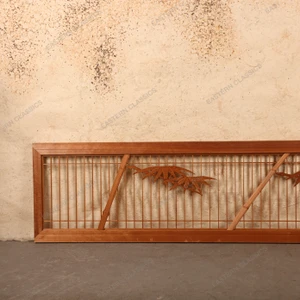
Vintage Japanese Ranma Transom Panel, Late Showa 1966-1989 | SKU: 26J-0232-2
SKU: 26J-0232-2
Sold Out




Do you like this piece?
We’ll let you know when we have a similar item.
 Notify me about similar pieces

A masterwork of Japanese architectural carving -- cranes in flight among wind-swept pine, rendered in warm openwork hardwood.
A ranma is a traditional Japanese transom panel fitted above sliding doors or between rooms to allow light and air to pass while adding a refined decorative accent to the interior. This striking example features deep relief openwork carving depicting cranes -- the tsuru, a powerful symbol of longevity, good fortune, and grace in Japanese culture -- soaring dynamically through sweeping pine branches. The composition fills the full length of a recessed rounded-corner cartouche, with the birds rendered in lively, naturalistic detail: fanned tail feathers, outstretched wings, and curved necks each individually articulated by a skilled hand. The surrounding pine boughs are carved with meticulous layered texture, each cluster of needles fanning outward in crisp, fan-like sprays. The carved panel sits within a two-tone wood frame -- a lighter surround enclosing the deeper-toned carved field -- giving the piece a clean, architectural finish on both front and back. Consistent with handcrafted Japanese architectural woodwork of the Late Showa period, this is a fine example of vintage Japanese craft at its most expressive.
Freed from its original architectural context, this ranma translates beautifully into a range of modern living room and entryway settings. Mounted horizontally on a wall, it becomes a dramatic statement piece of Japanese wall art -- the openwork silhouette casting delicate shadows in natural or accent lighting, perfectly suited to a Japandi style or wabi-sabi aesthetic interior. Lean it against a console or mantelpiece as a decorative accent, or suspend it above a doorway or window to recapture its original architectural spirit in a contemporary home. Its long, low proportions and warm honey-toned wood make it an ideal housewarming gift or unique gift for collectors and Japanophiles who appreciate handcrafted Japanese vintage decor with real cultural depth.
A rare and sculptural piece of vintage Japanese architectural art -- handcarved with an auspicious crane-and-pine motif that brings warmth, symbolism, and quiet elegance to any modern interior.
We use professional studio lighting to highlight the natural character of the wood. As a result, the tone may appear slightly warmer than under natural daylight.
All vintage items are sold as-is. Each piece may exhibit signs of age, including scratches, wear, or minor imperfections. These are not considered defects but natural evidence of the item’s authenticity and age.
SKU: 26J-0232-2


SKU: 26J-0538-2


SKU: 26M-553-2
