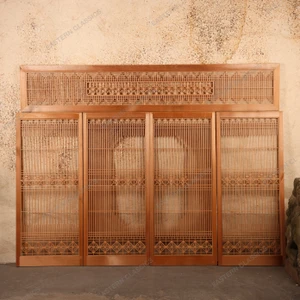


 International Shipping Notice
 How We Pack Your Tansu
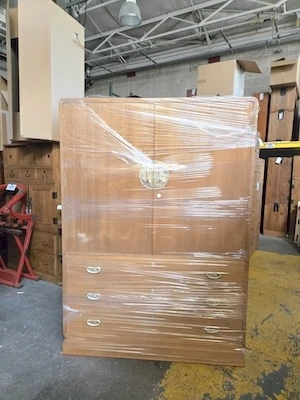
Each piece is carefully inspected, cleaned, and wrapped with protective plastic wrap.
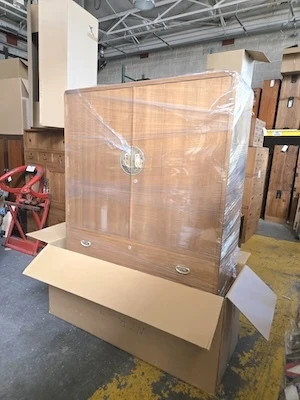
Styrofoam padding is placed at the bottom of the box, and the tansu is carefully positioned on top.
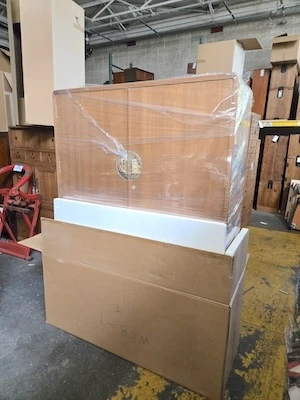
Additional Styrofoam is added around the tansu to protect all sides.
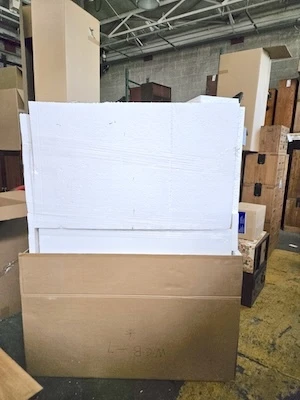
The piece is fully surrounded with Styrofoam and enclosed securely in a box.

The boxed item is placed on a pallet and secured with poly banding straps for safe transport.
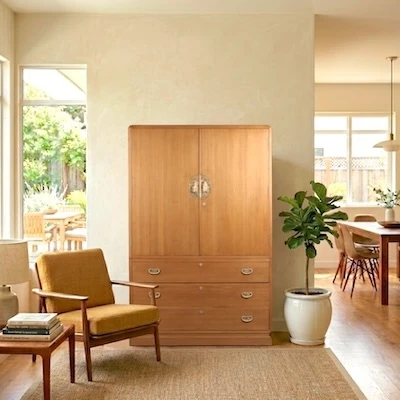
Arrives safely, ready to add warmth, history, and Japanese craftsmanship to your space.

A finely hand-carved openwork architectural panel depicting cranes in flight among windswept pine -- a timeless emblem of longevity and good fortune in Japanese craft.
A ranma is a decorative transom panel traditionally fitted above sliding doors (fusuma or shoji) in a Japanese interior, allowing light and air to pass between rooms while providing an opportunity for refined ornamental carving. This example is a superb specimen of vintage Japanese architectural woodwork, hand-carved from a straight-grained softwood -- consistent in color, grain pattern, and weight with sugi (Japanese cedar) -- finished in a warm amber-brown tone that highlights the natural figure of the wood. The wide horizontal panel is set within a cleanly molded rectangular border frame, and the interior field is filled with through-cut relief carving of exceptional quality. The central motif features cranes in dynamic flight, their wings fully spread, rendered with crisp feather detail that makes full use of the wood's natural grain. Flanking the birds, stylized matsu (pine) branches fan outward in the classic Japanese manner, their layered needle clusters carved with a radiating, almost sculptural depth. The negative spaces between the carved elements are open to light, giving the panel an airy, lace-like quality that would have allowed soft filtered light to pass through when installed as architectural Japanese vintage furniture.
Removed from its original architectural context, this ranma transitions beautifully into a modern home as a striking living room accent or bedroom decor statement. Mount it horizontally on a feature wall as a large-format piece of Japanese wall art -- the openwork carving casts wonderful shadow patterns when lit from behind or from the side. It works equally well as a headboard accent above a low platform bed in a Japandi style or wabi-sabi aesthetic interior, or as a shelf display piece leaned against the wall on a console or credenza. The auspicious crane-and-pine motif makes it a meaningful and unique housewarming gift or gift for collectors of handcrafted Japanese decor. Its long, low proportions also suit it perfectly as an entryway furniture accent, mounted above a shoe bench or genkan storage unit to bring an immediate sense of Japanese heritage to the entrance of a home.
A rare and beautifully preserved example of handcrafted Japanese architectural woodwork -- the crane-and-pine carving carries centuries of auspicious symbolism into any modern interior.
We use professional studio lighting to highlight the natural character of the wood. As a result, the tone may appear slightly warmer than under natural daylight.
All vintage items are sold as-is. Each piece may exhibit signs of age, including scratches, wear, or minor imperfections. These are not considered defects but natural evidence of the item’s authenticity and age.


SKU: 26M-663-2


SKU: 26J-0232-2