


Vintage Japanese Kumiko Ranma Transom Panel, Late Showa 1966-1989 | SKU: 26M-663-2
SKU: 26M-663-2
Sold Out




 International Shipping Notice
 How We Pack Your Tansu
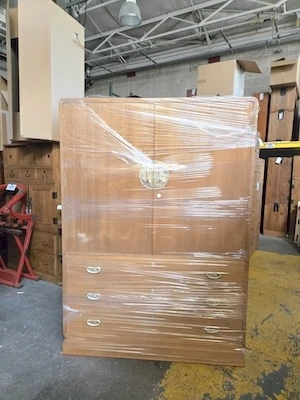
Each piece is carefully inspected, cleaned, and wrapped with protective plastic wrap.
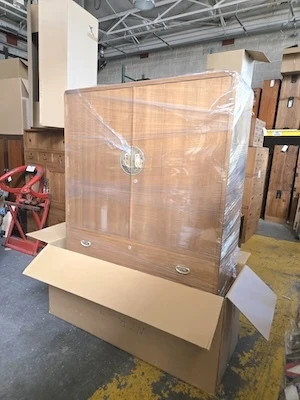
Styrofoam padding is placed at the bottom of the box, and the tansu is carefully positioned on top.
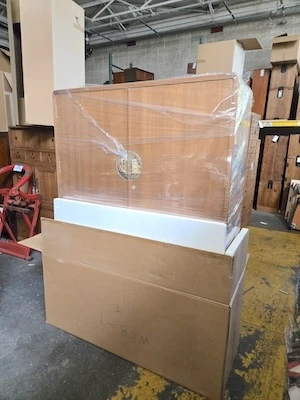
Additional Styrofoam is added around the tansu to protect all sides.
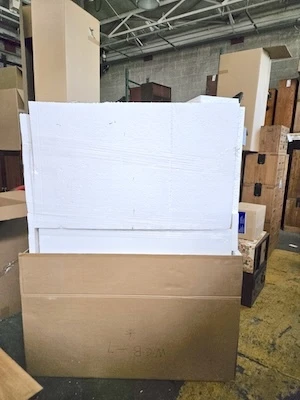
The piece is fully surrounded with Styrofoam and enclosed securely in a box.
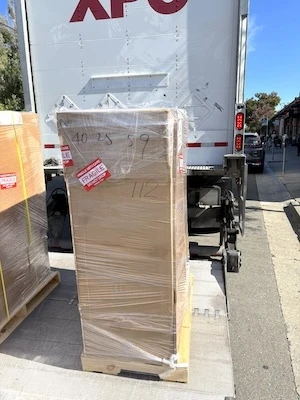
The boxed item is placed on a pallet and secured with poly banding straps for safe transport.
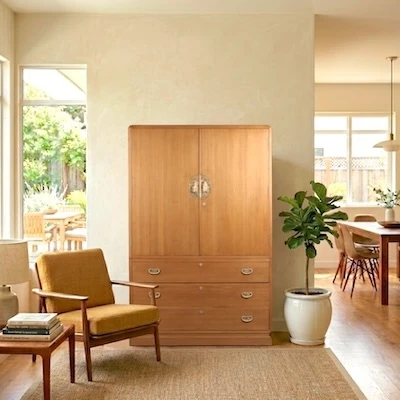
Arrives safely, ready to add warmth, history, and Japanese craftsmanship to your space.

A matched architectural set of kumiko shoji sliding panels and ranma transom -- showcasing asanoha and kikko lattice work in warm honey-toned wood.
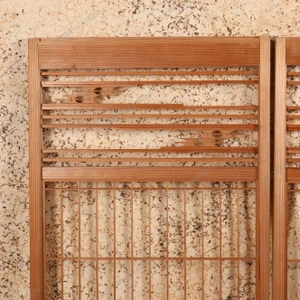
A shoji is a traditional Japanese sliding door or partition panel built around a wooden lattice framework -- historically fitted with translucent washi paper to diffuse light softly throughout a room. This matched set consists of multiple tall sliding door panels paired with a wide horizontal ranma transom panel designed to sit above them, together forming a complete interior architectural surround. The dense vertical koshi lattice of the main panels is punctuated at the upper and lower registers by richly detailed kumiko decorative bands featuring the classic asanoha (hemp leaf) and kikko (tortoiseshell) geometric motifs -- patterns long associated with good fortune and longevity in Japanese craft tradition. The ranma repeats the same mixed-lattice and asanoha kumiko vocabulary, unifying the set with a satisfying visual rhythm. Throughout, the wood displays a clean, warm amber tone with a straight, even grain consistent with Japanese softwood construction, and the panels retain what appears to be their original translucent paper backing, glowing softly behind the lattice. The crisp, machined precision of the joinery is characteristic of quality Late Showa production, when skilled craftsmen could still execute authentic kumiko techniques with high consistency.
In a contemporary home, this set offers remarkable versatility as vintage Japanese architectural decor. Installed as a room divider, the panels define zones within an open-plan living room or home office while allowing light to filter through -- a natural fit for Japandi style or wabi-sabi aesthetic interiors. Individual panels can be mounted flat against a wall as dramatic living room accent pieces, their intricate geometric lattice serving as artwork in their own right. The ranma panel alone works beautifully as an entryway focal point hung horizontally above a console table or doorway, casting delicate patterned shadows when backlit. This set also makes an exceptional gift for collectors of Japanese vintage architectural elements or for Japanophiles who appreciate handcrafted Japanese design at its most refined.
A striking example of vintage Japanese architectural craft -- this shoji and ranma panel set brings the timeless geometry of kumiko woodworking into any modern interior.
We use professional studio lighting to highlight the natural character of the wood. As a result, the tone may appear slightly warmer than under natural daylight.
All vintage items are sold as-is. Each piece may exhibit signs of age, including scratches, wear, or minor imperfections. These are not considered defects but natural evidence of the item’s authenticity and age.
SKU: 26M-663-2


SKU: 26J-0510

SKU: 26M-664


SKU: 26M-553-2
