




 International Shipping Notice
 How We Pack Your Tansu
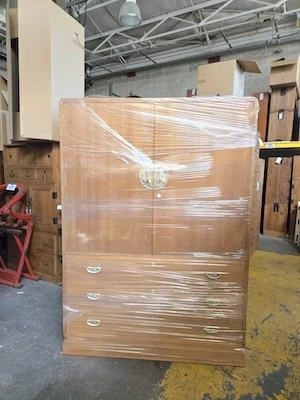
Each piece is carefully inspected, cleaned, and wrapped with protective plastic wrap.
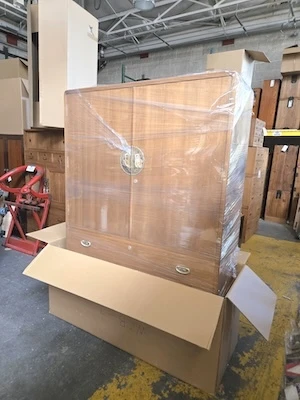
Styrofoam padding is placed at the bottom of the box, and the tansu is carefully positioned on top.
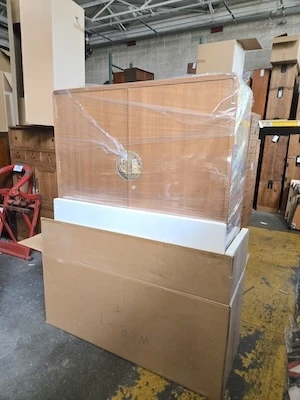
Additional Styrofoam is added around the tansu to protect all sides.
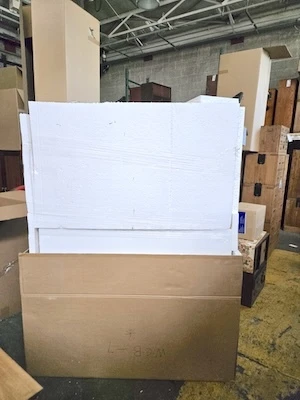
The piece is fully surrounded with Styrofoam and enclosed securely in a box.
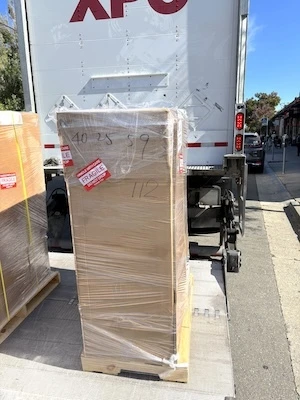
The boxed item is placed on a pallet and secured with poly banding straps for safe transport.
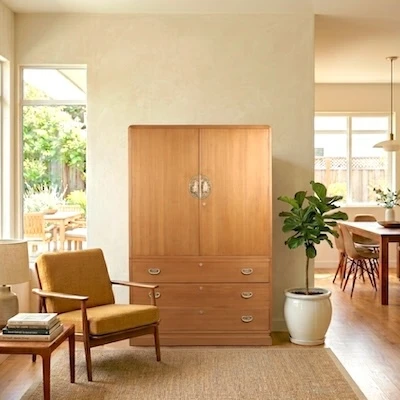
Arrives safely, ready to add warmth, history, and Japanese craftsmanship to your space.
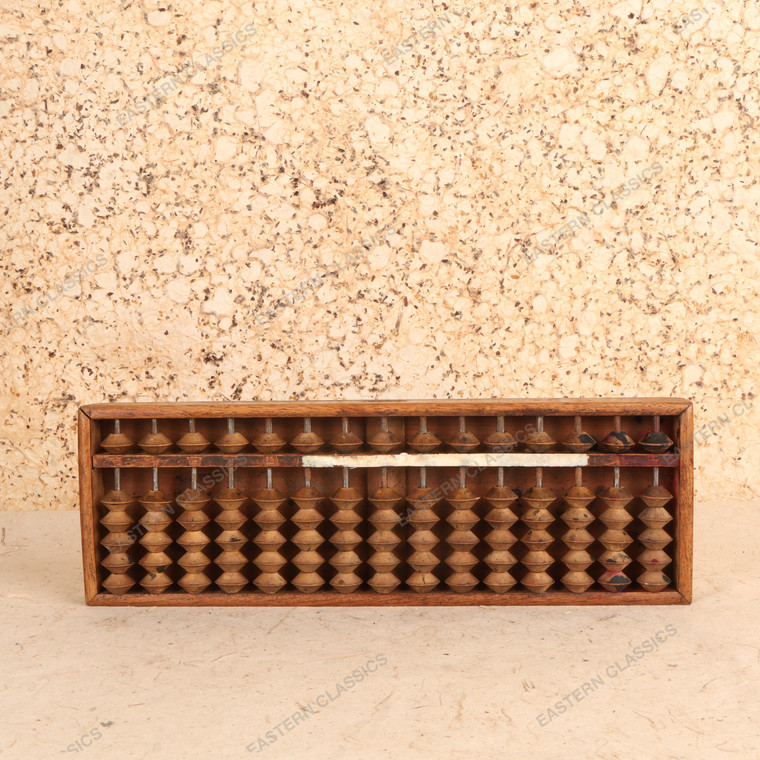
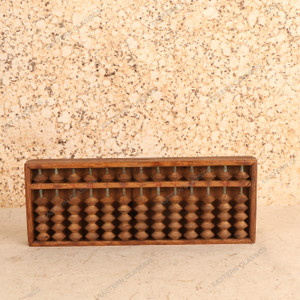
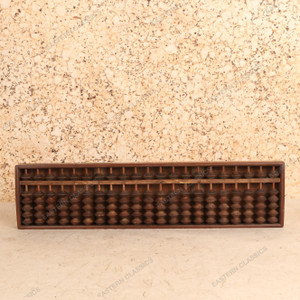
A well-worn piece of Japanese commercial history -- a classic soroban abacus bearing decades of honest daily use.
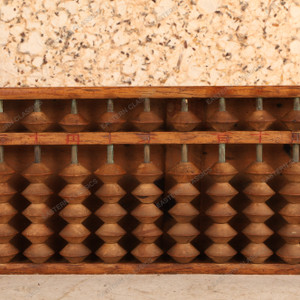
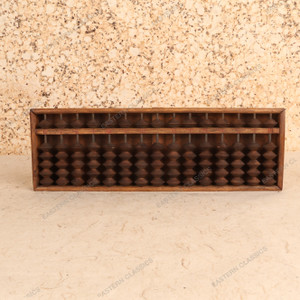
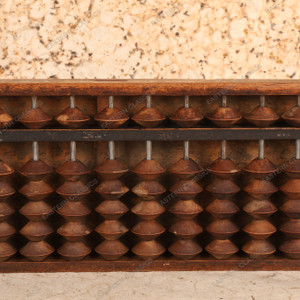
A soroban is a traditional Japanese abacus used for centuries in commerce, accounting, and education across Japan. Refined from its Chinese predecessor into a uniquely efficient form, the soroban features a horizontal dividing beam -- called the reckoning bar -- that separates one upper bead (representing five units) from multiple lower beads (each representing one unit) per column. This design allows rapid mental arithmetic that, in skilled hands, can rival an electronic calculator. During the postwar Showa era, soroban remained essential tools in shops, banks, and classrooms throughout Japan, and proficiency in soroban use was a valued skill taught in schools well into the 1980s. This example is constructed with a sturdy hardwood frame displaying a warm, richly grained surface, turned wooden beads threaded on metal rods, and a partially white-covered reckoning bar. The back panel is a single flat board of the same wood, worn smooth with age. Ink marks and paint traces on several beads, patina on the metal rods, and general surface wear all speak to years of active use -- hallmarks prized by collectors of vintage Japanese craft and everyday vintage pieces.
Today, a soroban like this makes a striking piece of living room or home office decor -- a tangible conversation piece that connects the modern home to Japan's mercantile past. Displayed flat on a desk or shelf, it brings a wabi-sabi aesthetic to minimalist or Japandi-style interiors, its aged wood and worn beads adding warmth and texture. It also serves as a genuine and functional math teaching tool for curious children or adults interested in mental arithmetic -- soroban instruction is enjoying a revival worldwide. For collectors of Japanese vintage objects and lovers of analog craft, this is a unique gift for Japanophiles or anyone who appreciates the beauty of objects shaped by long use.
A genuine relic of postwar Japanese daily life -- this vintage soroban abacus brings the quiet beauty of analog craft and wabi-sabi history into any modern home or workspace.
We use professional studio lighting to highlight the natural character of the wood. As a result, the tone may appear slightly warmer than under natural daylight.
All vintage items are sold as-is. Each piece may exhibit signs of age, including scratches, wear, or minor imperfections. These are not considered defects but natural evidence of the item’s authenticity and age.