

 International Shipping Notice
 How We Pack Your Tansu
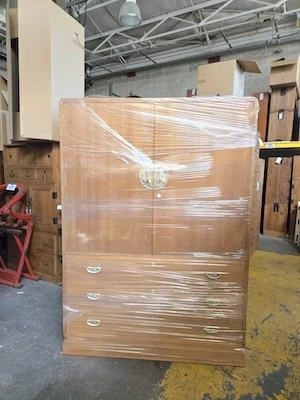
Each piece is carefully inspected, cleaned, and wrapped with protective plastic wrap.
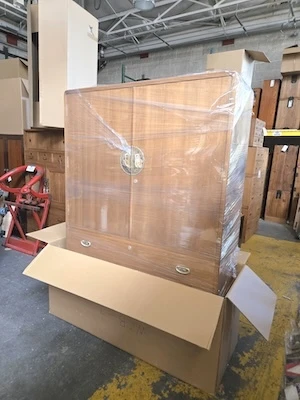
Styrofoam padding is placed at the bottom of the box, and the tansu is carefully positioned on top.
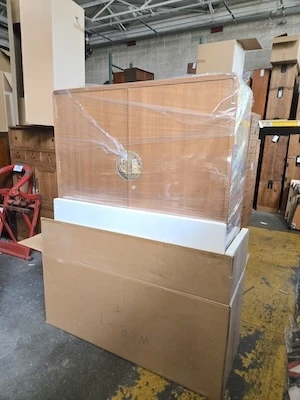
Additional Styrofoam is added around the tansu to protect all sides.
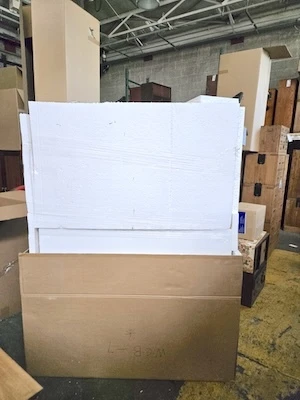
The piece is fully surrounded with Styrofoam and enclosed securely in a box.
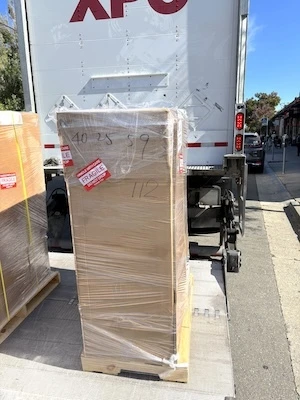
The boxed item is placed on a pallet and secured with poly banding straps for safe transport.
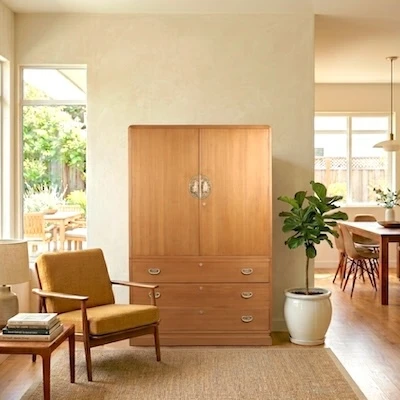
Arrives safely, ready to add warmth, history, and Japanese craftsmanship to your space.

A rare and deeply textural piece of Japanese rural folk craft -- a rope-lashed wooden back carrier that tells the story of a working Japan now long past.
A shoi-ko is a traditional Japanese wooden back-carrying frame used by farmers, mountain workers, and rural laborers to transport heavy loads hands-free across difficult terrain. This vintage example is constructed in the classic ladder form: two upright wooden staves -- showing the straight, close grain of a light softwood -- joined by cross-rungs secured with wooden peg joints, the whole load platform densely woven with tightly laid natural fiber cord in neat horizontal rows. The thick twisted shoulder straps, striped with traces of teal-dyed fiber, are lashed to the frame with heavy knotted cordage at the base feet, which raise the frame off the ground when resting. Every element speaks to utilitarian ingenuity -- no metal fasteners, no lacquer, no ornament -- just rope, wood, and the knowledge of generations of rural craftspeople. As a piece of Japanese vintage folk craft and mingei (folk art), it is exceptionally evocative.
Today, a piece like this shines as a statement wall accent in a living room, hallway, or home studio with a wabi-sabi aesthetic or Japandi style sensibility. Leaned against a whitewashed or plaster wall -- as it is shown here -- it becomes instant sculptural art: the geometry of the ladder frame, the dense horizontal rhythm of the rope weave, and the faded teal accents create a composition that no modern reproduction could replicate. It also works beautifully as a blanket or textile display ladder in a bedroom or reading nook, or as a towel holder in a bathroom with a rustic or natural decor theme. A compelling and unique gift for collectors of Japanese vintage folk objects, mingei enthusiasts, or anyone drawn to the beauty of honest, hand-made things.
A striking and authentic piece of Japanese vintage folk craft -- proof that objects made purely for hard work can carry just as much beauty as anything made for art.
We use professional studio lighting to highlight the natural character of the wood. As a result, the tone may appear slightly warmer than under natural daylight.
All vintage items are sold as-is. Each piece may exhibit signs of age, including scratches, wear, or minor imperfections. These are not considered defects but natural evidence of the item’s authenticity and age.