




 International Shipping Notice
 How We Pack Your Tansu
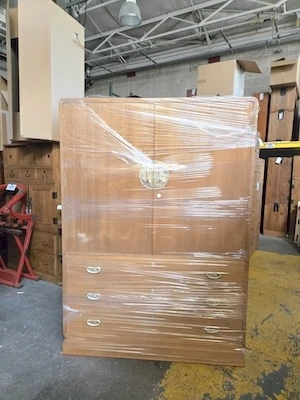
Each piece is carefully inspected, cleaned, and wrapped with protective plastic wrap.
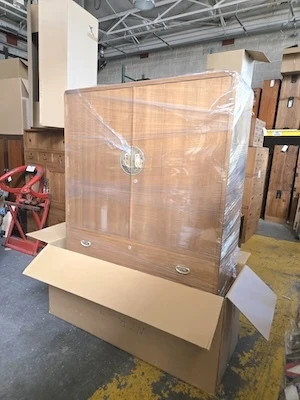
Styrofoam padding is placed at the bottom of the box, and the tansu is carefully positioned on top.
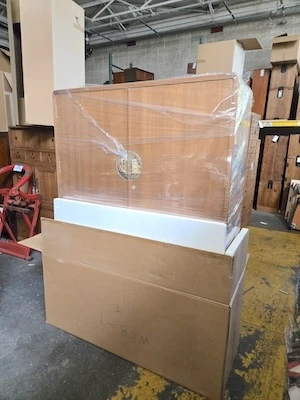
Additional Styrofoam is added around the tansu to protect all sides.
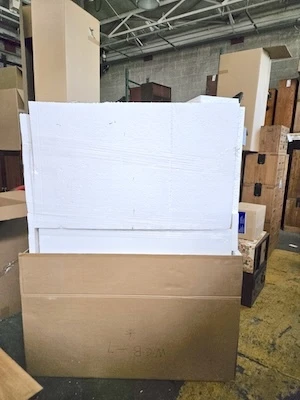
The piece is fully surrounded with Styrofoam and enclosed securely in a box.
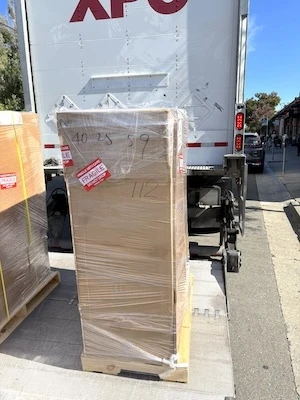
The boxed item is placed on a pallet and secured with poly banding straps for safe transport.
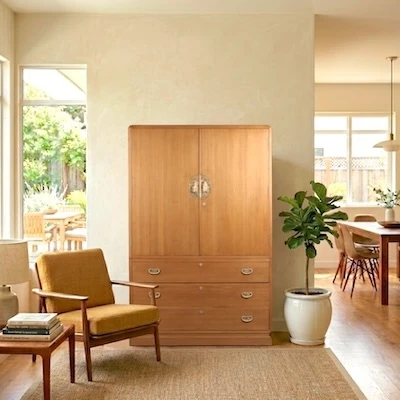
Arrives safely, ready to add warmth, history, and Japanese craftsmanship to your space.

A boldly painted white dragon ascending through storm clouds and crashing waves -- a classic symbol of power, protection, and good fortune in Japanese art.
A kakejiku is a traditional Japanese hanging scroll used to decorate the tokonoma, the recessed display alcove found in formal Japanese rooms. Designed to be seasonally rotated, kakejiku were among the most prestigious forms of decorative art in the Japanese home, and dragon subjects were especially prized for their association with strength, divine protection, and auspicious energy. This striking example, dating to the Early Showa period (1927-1945), depicts a powerful white ryu -- the Japanese dragon -- spiraling upward from dark rocky peaks and foaming waves toward a swirling vortex of storm clouds above. The composition is rendered in ink and pigment on paper, with confident brushwork that captures the creature's scaled body, fierce gaze, and gold-highlighted claws and horns in vivid detail. Accents of blue, gold, and white lift the image against a dramatic ink-wash ground. Two sets of calligraphic inscriptions are visible on the painting surface -- an upper title passage and a lower artist signature with seal -- lending the work an authentic scholarly character consistent with Japanese vintage art of this era.
Today, this kakejiku makes a commanding statement as Japanese dragon wall art in any modern interior. Its vertical format suits a narrow entryway or hallway, where it introduces an immediate focal point with wabi-sabi aesthetic character. In a living room or home office, hung against a neutral wall, it functions as a gallery-quality accent that speaks to collectors of vintage Japanese art and lovers of bold East Asian imagery alike. The warm amber-orange of the patterned fabric mounting -- woven with a repeating cloud motif -- pairs beautifully with natural wood tones and earthy textiles favored in Japandi-style interiors. A unique gift for collectors, Japanophiles, or anyone drawn to the power and symbolism of traditional Japanese painting.
A powerful and auspicious work of Japanese vintage art -- this dragon kakejiku brings centuries of symbolism and masterful brushwork into any modern home.
We use professional studio lighting to highlight the natural character of the wood. As a result, the tone may appear slightly warmer than under natural daylight.
All vintage items are sold as-is. Each piece may exhibit signs of age, including scratches, wear, or minor imperfections. These are not considered defects but natural evidence of the item’s authenticity and age.



SKU: 26J-0723