





 International Shipping Notice
 How We Pack Your Tansu
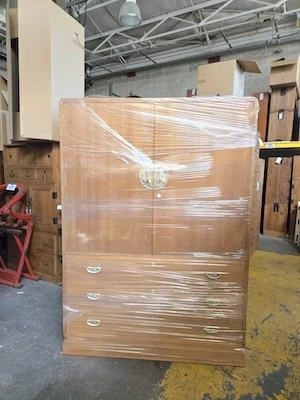
Each piece is carefully inspected, cleaned, and wrapped with protective plastic wrap.
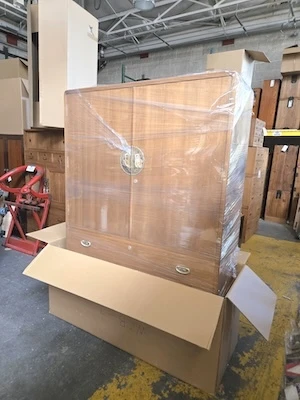
Styrofoam padding is placed at the bottom of the box, and the tansu is carefully positioned on top.
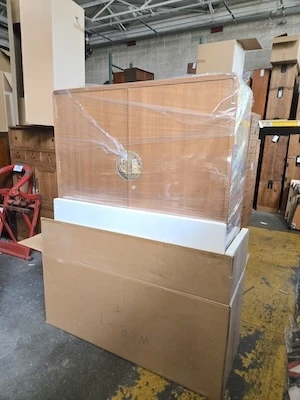
Additional Styrofoam is added around the tansu to protect all sides.
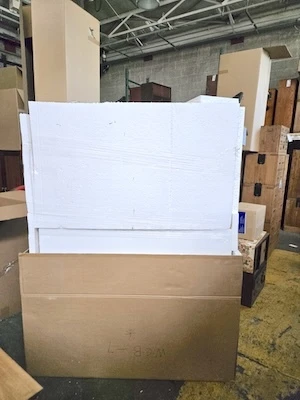
The piece is fully surrounded with Styrofoam and enclosed securely in a box.
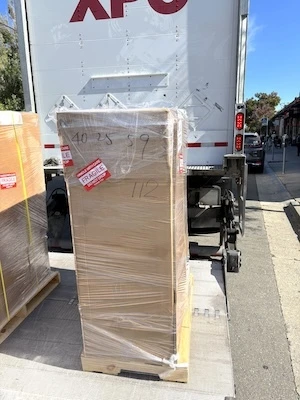
The boxed item is placed on a pallet and secured with poly banding straps for safe transport.
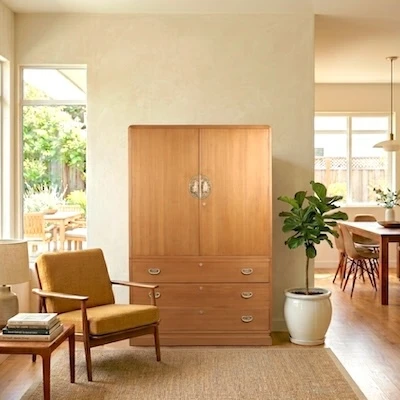
Arrives safely, ready to add warmth, history, and Japanese craftsmanship to your space.

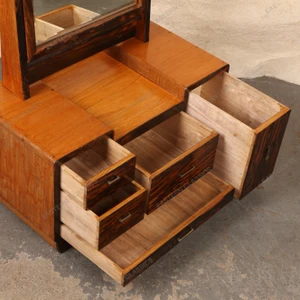
A richly grained Mid Showa kyodai with a tri-fold mirror and stepped asymmetric cabinet -- a masterwork of postwar Japanese bedroom furniture.
A kyodai is a traditional Japanese dressing table combining a tall standing mirror with a low storage cabinet, designed as a dedicated grooming station for daily use. This handcrafted Japanese vintage furniture piece dates to the mid Showa era, a period when skilled craftsmen blended classical Japanese joinery with cleaner modernist forms. The exterior panels display a dramatically figured, boldly swirling grain -- consistent with kiri (paulownia) finished under a deep reddish-brown lacquer coat -- while the interior drawer boxes are lined with a lighter secondary wood, a hallmark of careful traditional construction. The tri-fold mirror unit pivots on two hinged side panels, each framed in the same warm hardwood, allowing the user to view multiple angles simultaneously. Rounded cabinet corners, a stepped asymmetric silhouette, and understated brass drop-ring pulls complete a design that feels both distinctly Japanese and quietly art deco in spirit.
In a modern home, this vintage kyodai makes an extraordinary bedroom vanity or dressing table -- simply add a low stool and let the tri-fold mirror do the rest. The stepped base cabinet, with its multiple drawers and compartments in varied sizes, offers generous organized storage for jewelry, skincare, accessories, or art supplies, making it equally effective as a bedroom organizer or a home office accent piece. Its warm reddish-brown finish and architectural silhouette suit Japandi style interiors, wabi-sabi aesthetic bedrooms, and mid-century modern spaces alike. A rare and sculptural gift for collectors of Japanese vintage furniture or anyone seeking a one-of-a-kind housewarming gift with genuine history.
A striking piece of vintage Japanese vintage furniture -- the kyodai brings warmth, craftsmanship, and timeless beauty to any modern bedroom or dressing space.
We use professional studio lighting to highlight the natural character of the wood. As a result, the tone may appear slightly warmer than under natural daylight.
All vintage items are sold as-is. Each piece may exhibit signs of age, including scratches, wear, or minor imperfections. These are not considered defects but natural evidence of the item’s authenticity and age.


SKU: 26J-0806-2


