
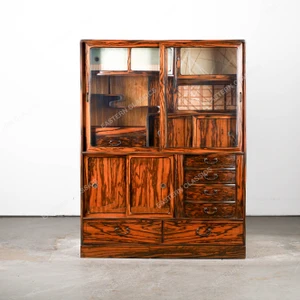

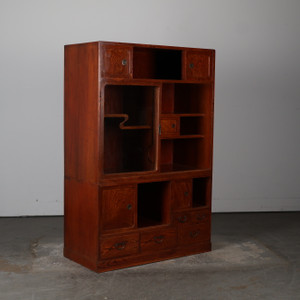
Vintage Japanese Cha Tansu Tea Chest With Large Glass Hikido Siding Door And Mokko Pull Drawers - 1940s Showa Era (25D-C427)
Rest. & Insp. by: Fukutsuka in Japan
SKU: 25D-C427
Sold Out




 International Shipping Notice
 How We Pack Your Tansu
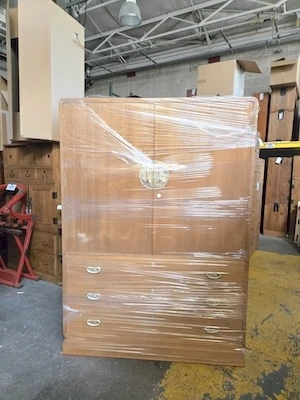
Each piece is carefully inspected, cleaned, and wrapped with protective plastic wrap.
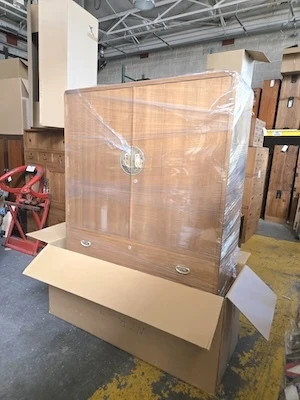
Styrofoam padding is placed at the bottom of the box, and the tansu is carefully positioned on top.
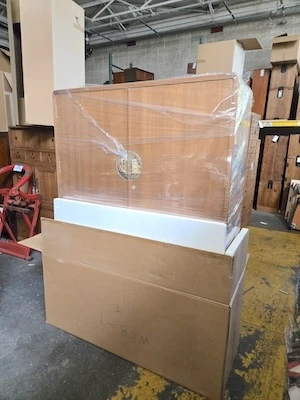
Additional Styrofoam is added around the tansu to protect all sides.
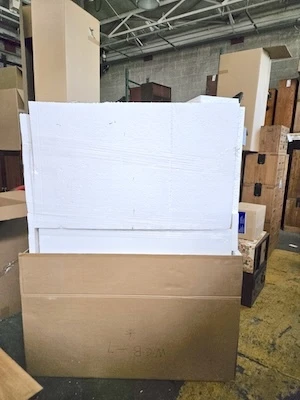
The piece is fully surrounded with Styrofoam and enclosed securely in a box.
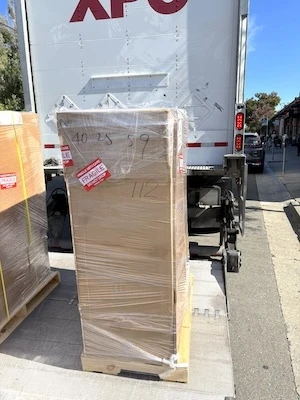
The boxed item is placed on a pallet and secured with poly banding straps for safe transport.
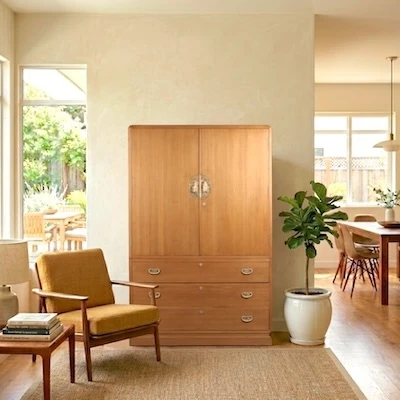
Arrives safely, ready to add warmth, history, and Japanese craftsmanship to your space.

Showa-era cha tansu with warm sugi grain, glass hikido doors, and classic three-drawer configuration for refined tea storage.
This vintage Japanese cha tansu (tea chest) combines understated Showa-period design with practical everyday function. The cabinet is framed in a dark-stained carcass that sets off the richly figured sugi (Japanese cedar) panels, whose flowing grain brings warmth and movement to the piece. Traditional hikido sliding doors in both wood and glass create a balanced façade, while the open interior shelving offers generous space for chawan, yunomi, and serving ware.
At center, a pair of glass sliding doors allows for the display of treasured tea utensils, contrasting with the enclosed wooden compartments above and below that keep other items discreetly stored. Three shallow drawers with original metal warabite-style pulls run horizontally through the middle, ideal for chashaku, fukusa, and small tools. With its clean lines, square recessed door pulls, and harmonious mix of open and closed storage, this cha tansu transitions effortlessly from a traditional washitsu to a contemporary interior.
A handsome, functional cha tansu that brings the quiet elegance of Showa-era Japanese tea culture into any space.
We use professional studio lighting to highlight the natural character of the wood. As a result, the tone may appear slightly warmer than under natural daylight.
All vintage and antique/vintage items are sold as-is. Each piece may exhibit signs of age, including scratches, wear, or minor imperfections. These are not considered defects but natural evidence of the item’s authenticity and age.
Rest. & Insp. by: Fukutsuka in Japan
SKU: 25D-C427


Rest. & Insp. by: Harada in Japan
SKU: 25D-D004


Rest. & Insp. by: Harada in Japan
SKU: 25D-C416
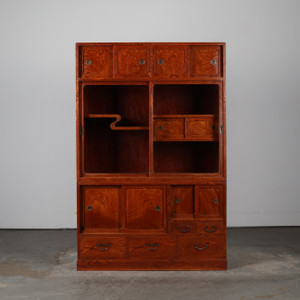
Rest. & Insp. by: Yamada in Japan
SKU: 25D-C414
