



Do you like this piece?
We’ll let you know when we have a similar item.
 Notify me about similar pieces

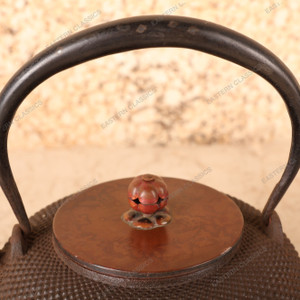
A rare handcast iron kama with geometric surface relief, a lacquered wood lid, and its original inscribed wooden storage box -- a distinguished piece of Japanese antique teaware.
A kama is a traditional Japanese iron kettle used in chado -- the Way of Tea -- to heat water for the preparation of matcha. Unlike the more common tetsubin (pouring kettle), the kama is set directly over a heat source in the tea room, its wide flat body and shallow profile designed to radiate gentle heat and produce the soft, murmuring sound that signals water at the perfect temperature. This handcrafted Japanese antique kama features a broad, flattened dome form resting on a wide scallop-edged flange, with a precisely incised diamond-lattice pattern -- likely a variation of the classic kikko or kikkomon geometric motif -- covering the entire upper body. The surface has the characteristic deep matte-black iron patina of aged cast ironwork, developed through decades of careful use. Cast ring handles on either side retain their original forged character, and the interior bears a maker's mark cast into the base -- a hallmark of a named craftsman's workshop, consistent with the Nambu or Kyoto iron casting traditions active during the Early Showa period. The piece retains its original lacquered wood lid with a rounded knop finial, and comes housed in its inscribed wooden tomobako (storage box), greatly enhancing its provenance and collector value.
Beyond its role in formal tea ceremony, this kama makes a striking living room accent or Japandi-style decorative object that brings an unmistakable sense of wabi-sabi to any interior. Displayed on a wooden shelf, tokonoma alcove, or low table, its sculptural form and richly aged iron surface speak to centuries of Japanese craft tradition. It works beautifully as a meditation room focal point or a desk accent in a home office styled around natural materials and minimalist decor. For collectors of Japanese antique teaware, scholars of chado, or anyone seeking a truly rare and functional art object, this kama is an exceptional find -- and a thoughtful gift for Japanophiles or serious tea enthusiasts alike.
A distinguished piece of Japanese antique teaware -- this handcast iron kama, complete with its lacquered lid and original tomobako, brings the quiet beauty of chado and the wabi-sabi aesthetic into any modern home or collection.
We use professional studio lighting to highlight the natural character of the wood. As a result, the tone may appear slightly warmer than under natural daylight.
All vintage and antique items are sold as-is. Each piece may exhibit signs of age, including scratches, wear, or minor imperfections. These are not considered defects but natural evidence of the item’s authenticity and age.