



 International Shipping Notice
 How We Pack Your Tansu
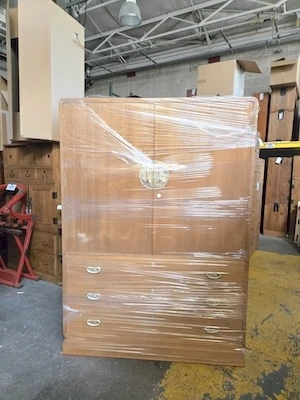
Each piece is carefully inspected, cleaned, and wrapped with protective plastic wrap.
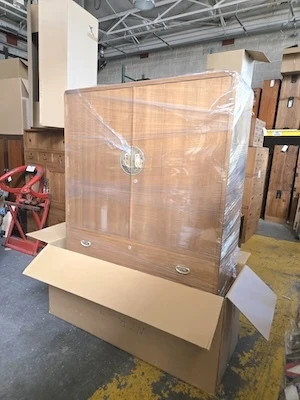
Styrofoam padding is placed at the bottom of the box, and the tansu is carefully positioned on top.
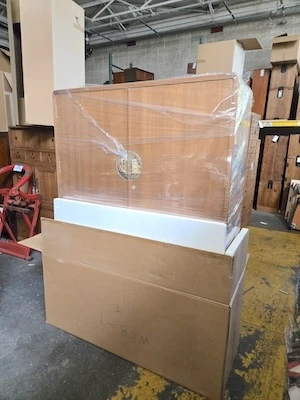
Additional Styrofoam is added around the tansu to protect all sides.
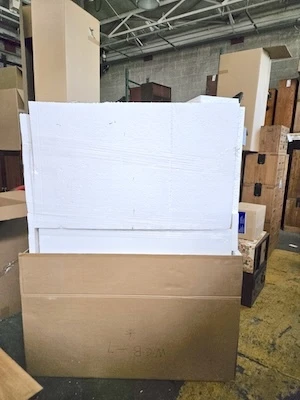
The piece is fully surrounded with Styrofoam and enclosed securely in a box.
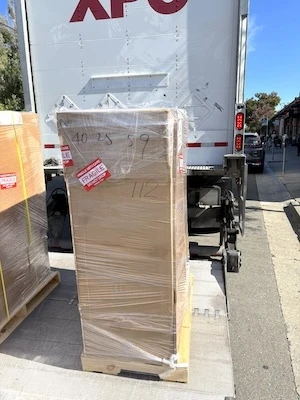
The boxed item is placed on a pallet and secured with poly banding straps for safe transport.
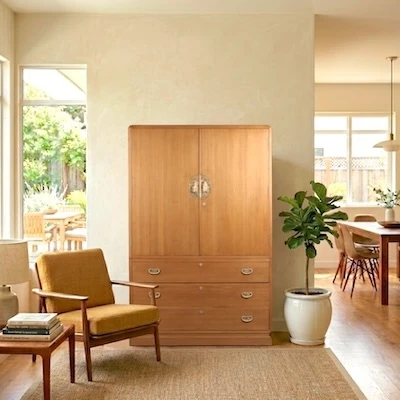
Arrives safely, ready to add warmth, history, and Japanese craftsmanship to your space.

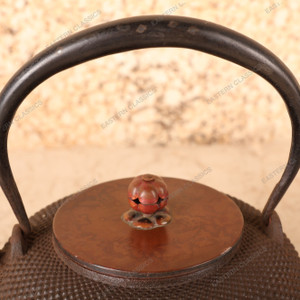
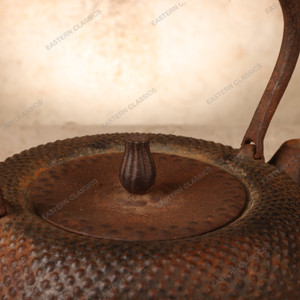
A hand-cast iron kettle blanketed in cascading ume blossoms -- a rare survivor of prewar Japanese ironwork craft.
A tetsubin is a traditional Japanese cast-iron kettle used to boil water for the tea ceremony and everyday tea preparation. Unlike a teapot (kyusu), the tetsubin was placed directly over a heat source -- historically a charcoal brazier or irori hearth -- and valued for the way its iron walls gently mineralized the water, said to soften the flavor and improve the taste of tea. This example, dating to the Early Showa period, is a superb specimen of handcrafted Japanese antique teaware. Its rounded, dome-shouldered body is covered entirely in a dense, all-over relief pattern of ume (plum blossom) motifs -- each five-petaled flower individually cast into the iron surface in a technique known as jomon texture relief. The plum blossom, a symbol of perseverance and early spring renewal in Japanese culture, was among the most beloved decorative motifs of the prewar era. The arched iron bail handle is fitted on pivoting lugs, and the flat cast-iron lid is topped with a round knob finial. The base is recessed with a concentric foot ring, consistent with quality ironwork of this period.
In a modern home, this tetsubin brings immediate visual weight and wabi-sabi character to any setting. Displayed on a wooden shelf, a kitchen windowsill, or a living room accent table, its dark iron patina and intricate blossom texture create a striking focal point in Japandi-style or minimalist decor. It works beautifully as a decorative vase holding dried branches or seasonal botanicals, or simply as a sculptural object alongside other Japanese antique teaware. Its compact, self-contained form also makes it a memorable housewarming gift or a thoughtful gift for collectors of Japanese antiques and tea culture enthusiasts.
A beautifully preserved piece of Japanese antique teaware -- this ume-patterned tetsubin carries the quiet poetry of prewar ironwork craft into any modern home.
We use professional studio lighting to highlight the natural character of the wood. As a result, the tone may appear slightly warmer than under natural daylight.
All vintage and antique items are sold as-is. Each piece may exhibit signs of age, including scratches, wear, or minor imperfections. These are not considered defects but natural evidence of the item’s authenticity and age.