


 International Shipping Notice
 How We Pack Your Tansu
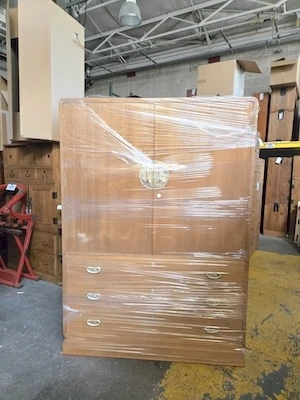
Each piece is carefully inspected, cleaned, and wrapped with protective plastic wrap.
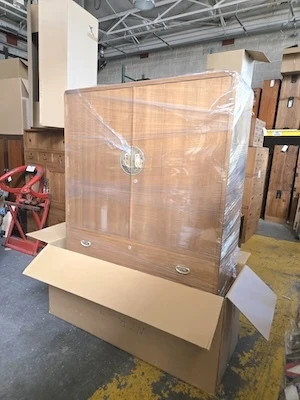
Styrofoam padding is placed at the bottom of the box, and the tansu is carefully positioned on top.
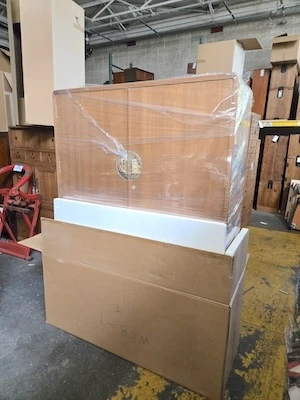
Additional Styrofoam is added around the tansu to protect all sides.
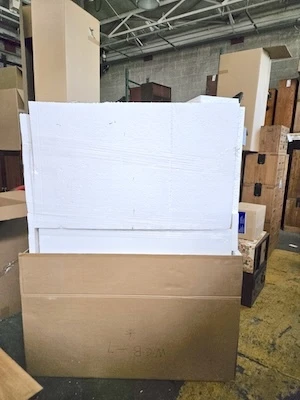
The piece is fully surrounded with Styrofoam and enclosed securely in a box.
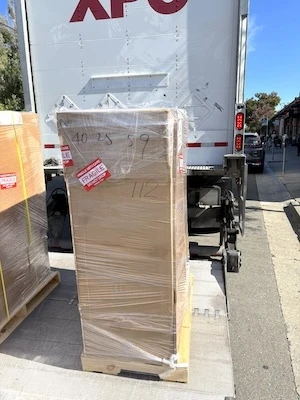
The boxed item is placed on a pallet and secured with poly banding straps for safe transport.
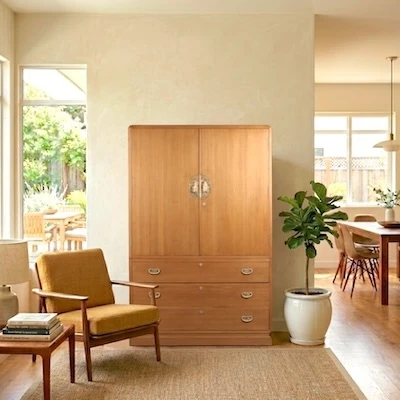
Arrives safely, ready to add warmth, history, and Japanese craftsmanship to your space.

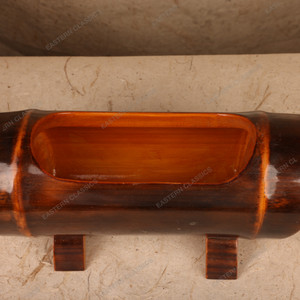
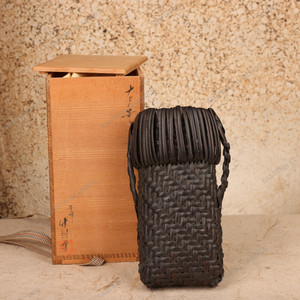
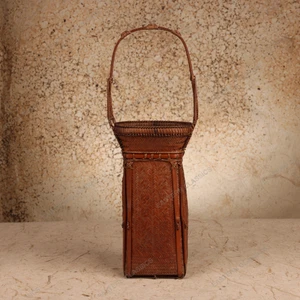
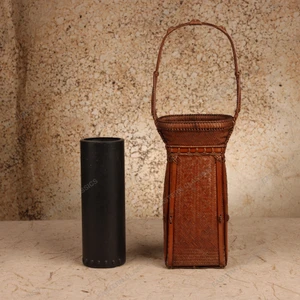
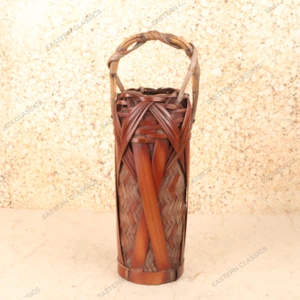
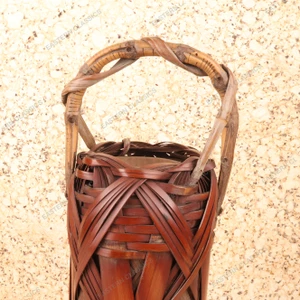
A masterwork of vintage Japanese bamboo craft -- a lacquered bamboo vase encased in an open-weave basket, presented with its original kiri wood storage box.
A hanakago is a traditional Japanese flower basket used to hold a vase or water vessel for ikebana, the classical art of Japanese flower arranging. This exceptional example consists of two distinct components: a cylindrical inner vase fashioned from a single section of natural bamboo and finished in a rich oxblood-red lacquer, and an outer open-weave bamboo basket woven in a bold interlocking hexagonal pattern -- a technique known as mutsume-ami -- that encases and protects the vase while transforming it into a sculptural object. The basket body tapers gently at the waist and flares toward the base, a silhouette that speaks to the refined aesthetic sensibility of the Showa era. The rim is neatly bound with layered bamboo strips, and a small looped handle is attached to the body, allowing the piece to be suspended or carried. The deep charcoal and burgundy tones of aged bamboo give the whole piece a commanding wabi-sabi presence. The accompanying kiri wood storage box, tied with a slate-grey grosgrain ribbon, confirms this piece was cherished and properly housed by a previous collector.
In a modern home, this vintage Japanese bamboo vase and basket pairing makes a stunning living room accent or entryway statement piece. Display it as a standalone sculptural object on a console table or low shelf -- the open weave catches light beautifully and draws the eye in any minimalist or Japandi-style interior. Slip a few dried botanicals or a single stem into the lacquered inner vase for a touch of organic living room decor that honours the ikebana tradition. It also makes a truly unique housewarming gift for collectors, Japanophiles, or anyone who appreciates handcrafted Japanese vintge craft with genuine age and provenance.
A rare and complete vintage Japanese bamboo craft set -- hanakago basket, lacquered vase, and original storage box -- that brings the quiet beauty of Showa-era craftsmanship into any modern home.
We use professional studio lighting to highlight the natural character of the wood. As a result, the tone may appear slightly warmer than under natural daylight.
All antique items are sold as-is. Each piece may exhibit signs of age, including scratches, wear, or minor imperfections. These are not considered defects but natural evidence of the item’s authenticity and age.