



 International Shipping Notice
 How We Pack Your Tansu
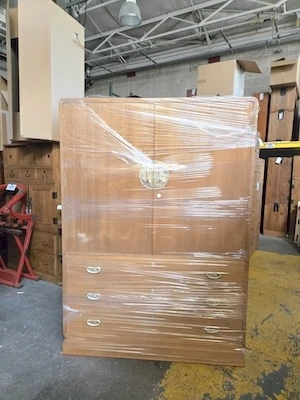
Each piece is carefully inspected, cleaned, and wrapped with protective plastic wrap.
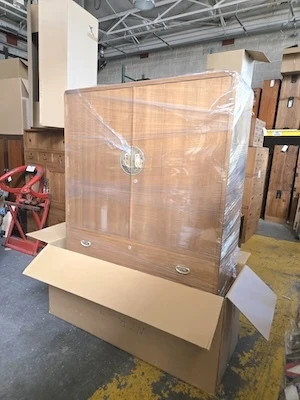
Styrofoam padding is placed at the bottom of the box, and the tansu is carefully positioned on top.
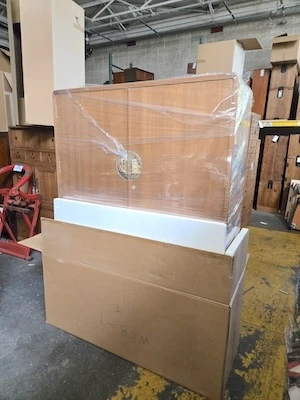
Additional Styrofoam is added around the tansu to protect all sides.
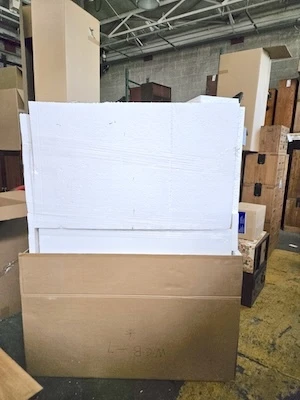
The piece is fully surrounded with Styrofoam and enclosed securely in a box.

The boxed item is placed on a pallet and secured with poly banding straps for safe transport.
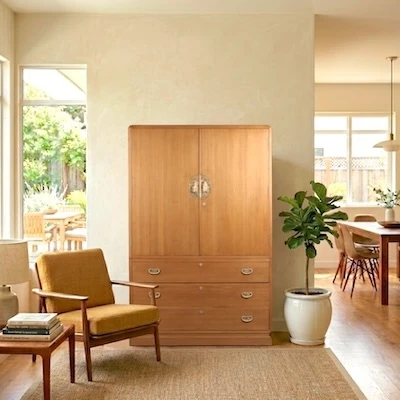
Arrives safely, ready to add warmth, history, and Japanese craftsmanship to your space.

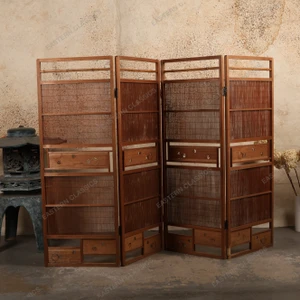
A four-panel byobu-style folding screen combining hand-woven reed panels with carved wood detailing -- a serene statement of mid-century Japanese craft.
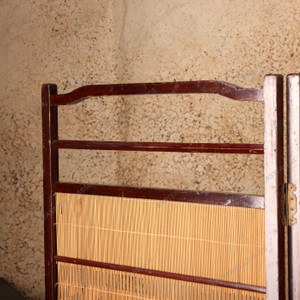
A byobu or tsuitate is a traditional Japanese folding screen used to divide interior space, block drafts, and create a sense of intimate enclosure within a room. This four-panel example, dating to the Mid Showa period (1946-1965), showcases the restrained elegance that defined postwar Japanese interior craft. Each panel is filled with densely woven fine reed or split bamboo matting -- held in place by horizontal dark-stained wood rails -- giving the screen a warm, organic texture that evokes the natural materials of a traditional Japanese interior. The structural frame is built from stained hardwood, likely sugi (cryptomeria) or a similar straight-grained softwood, finished to a rich dark brown. Running across each panel at mid-height is an open lattice section housing a carved decorative insert depicting a swallow in flight among willow branches -- a classic motif in Japanese decorative arts symbolizing seasonal change and natural grace. The top of each panel features a gently curved crest rail and a pair of turned bamboo-style rods, adding refinement to the overall composition. Metal hinges connect the panels, allowing the screen to be folded and repositioned with ease.
In a modern home, this vintage Japanese folding screen is as versatile as it is beautiful. Use it as a living room accent to frame a reading nook or define a lounge area, or place it behind a bed as an artful alternative to a headboard in a bedroom with a Japandi style or wabi-sabi aesthetic. It works equally well as an entryway privacy screen, a backdrop for a meditation or yoga corner, or a decorative divider in an open-plan home office. The warm reed tones and dark wood frame complement natural linen, rattan, and earthy ceramics, making it a standout piece for lovers of minimalist decor and handcrafted Japanese vintage furniture. A thoughtful housewarming gift or a prized addition to any collector's interior.
A beautifully crafted piece of vintage Japanese furniture that brings the calm of a traditional interior -- and the artistry of mid-century Japanese craft -- into any modern living space.
We use professional studio lighting to highlight the natural character of the wood. As a result, the tone may appear slightly warmer than under natural daylight.
All vintage items are sold as-is. Each piece may exhibit signs of age, including scratches, wear, or minor imperfections. These are not considered defects but natural evidence of the item’s authenticity and age.