





 International Shipping Notice
 How We Pack Your Tansu
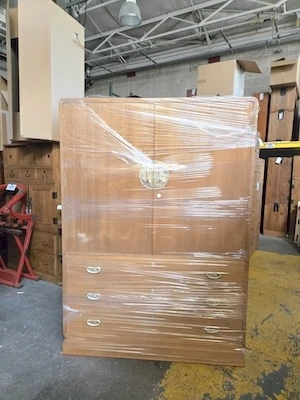
Each piece is carefully inspected, cleaned, and wrapped with protective plastic wrap.
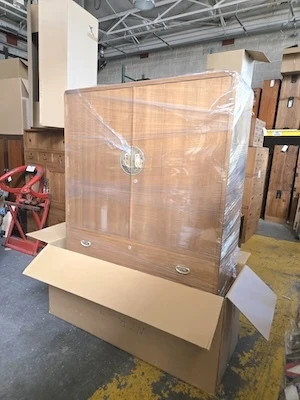
Styrofoam padding is placed at the bottom of the box, and the tansu is carefully positioned on top.
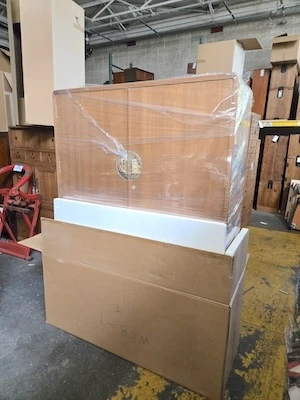
Additional Styrofoam is added around the tansu to protect all sides.
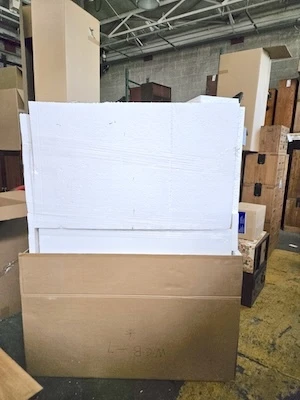
The piece is fully surrounded with Styrofoam and enclosed securely in a box.
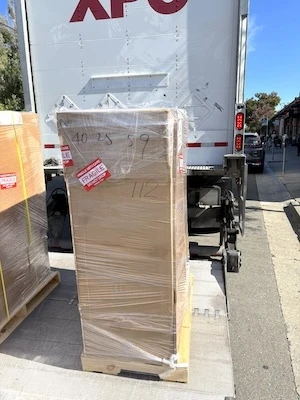
The boxed item is placed on a pallet and secured with poly banding straps for safe transport.
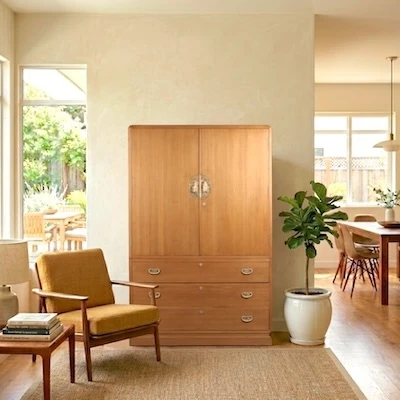
Arrives safely, ready to add warmth, history, and Japanese craftsmanship to your space.

A four-panel East Asian folding screen with woven reed panels, carved geometric lattice, and bamboo accent rods -- where natural texture meets decorative craft.
A Tsuitate is a freestanding multi-panel room divider used throughout East Asian interiors to define space, direct airflow, and add decorative presence. This example features a dark-stained hardwood frame divided into four hinged panels, each filled with tightly bundled and cord-strung reed or fine-strand bamboo matting that casts a warm, natural glow. Horizontal wood rails section each panel into distinct zones, and the upper register of each panel opens into a graceful curved top rail with slender bamboo-style accent rods spanning the void -- a detail that draws the eye upward and lightens the overall form. Running across the mid-height of every panel is a decorative carved lattice band featuring repeating floral-diamond cutout motifs, a classic ornamental element seen in both Japanese and broader East Asian craft traditions. Black metal hinges connect each panel with a smooth pivot action, and the sturdy base feet keep the screen stable on hard floors.
In a modern home, this screen earns its place in multiple rooms and settings. Use it as a bedroom divider to separate a dressing area or home office nook -- its woven reed panels filter light softly without fully blocking it, making it far more interesting than a plain partition wall. In an open-plan living room, it anchors a reading corner or frames a low sofa grouping with an easy Japandi style warmth. It also works beautifully in an entryway to conceal storage or greet guests with a layered natural texture. The dark cherry-toned frame pairs naturally with linen, rattan, raw wood, and matte ceramics -- making it a versatile statement for minimalist decor or a wabi-sabi aesthetic. A thoughtful housewarming gift for anyone drawn to East Asian design or handcrafted natural furnishings.
A striking piece of handcrafted East Asian screen furniture that brings natural texture, Japandi warmth, and timeless decorative presence to any modern interior.
We use professional studio lighting to highlight the natural character of the wood. As a result, the tone may appear slightly warmer than under natural daylight.
All vintage items are sold as-is. Each piece may exhibit signs of age, including scratches, wear, or minor imperfections. These are not considered defects but natural evidence of the item’s authenticity and age.


SKU: 26J-0764


