






 International Shipping Notice
 How We Pack Your Tansu
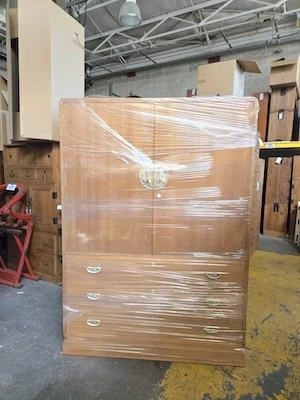
Each piece is carefully inspected, cleaned, and wrapped with protective plastic wrap.
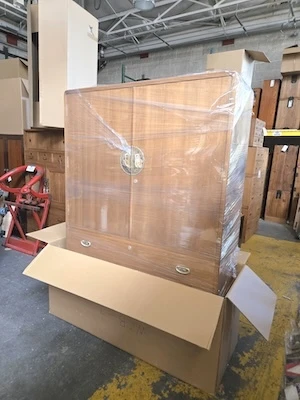
Styrofoam padding is placed at the bottom of the box, and the tansu is carefully positioned on top.
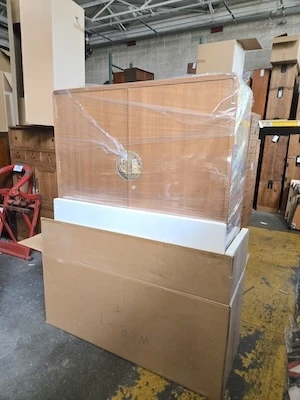
Additional Styrofoam is added around the tansu to protect all sides.
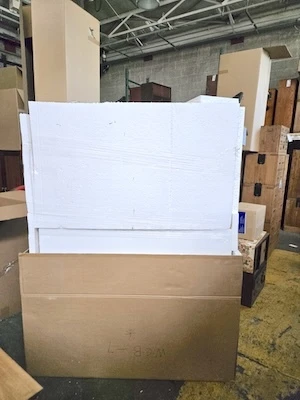
The piece is fully surrounded with Styrofoam and enclosed securely in a box.
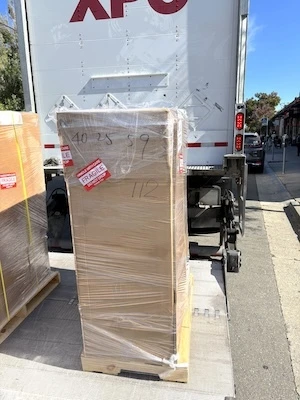
The boxed item is placed on a pallet and secured with poly banding straps for safe transport.
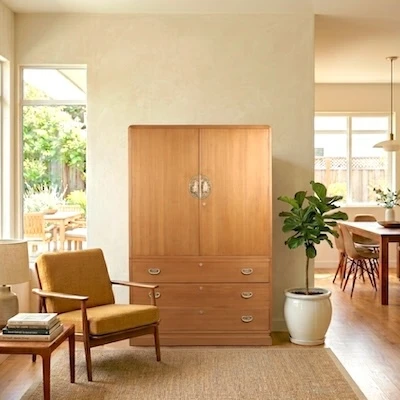
Arrives safely, ready to add warmth, history, and Japanese craftsmanship to your space.

A handsome pair of antique Japanese wooden sumitsubo with deeply worn patina, carved reservoirs, side winding wheels, and projecting guide pins -- traditional carpenter's ink line tools from the Meiji period.
This pair of antique Japanese sumitsubo reflects the practical beauty of traditional carpentry tools made for daily use. Each piece is hand-carved from wood with a smoothly hollowed ink reservoir at the top, a projecting arm, and a large circular side wheel used to wind line. Metal guide pins remain fitted through the side near the wheel, and one example retains a small turned end knob at the front. The surfaces show substantial age, darkened finish, and handling wear consistent with long workshop use.
The classic form of these tools is closely associated with Japanese carpentry, where a sumitsubo was used to hold inked line for marking straight layout lines on timber. Beyond their original function, these examples have a strong sculptural presence: rounded bodies, elegant asymmetry, and richly aged wood grain that make them especially appealing for display. They suit collectors of Japanese folk tools, woodworking antiques, and objects that embody wabi-sabi character through honest wear and utility.
A well-aged pair of Japanese carpenter's tools that brings together craftsmanship, utility, and the quiet presence of objects shaped by long use.
We use professional studio lighting to highlight the natural character of the wood. As a result, the tone may appear slightly warmer than under natural daylight.
All antique items are sold as-is. Each piece may exhibit signs of age, including scratches, wear, or minor imperfections. These are not considered defects but natural evidence of the item’s authenticity and age.


Rest. & Insp. by: Yamada in Japan
SKU: 26J-H0007-2
