


Antique Japanese Funa Tansu with Iron Hardware and Interior Drawers, Meiji Period, 1868-1911
Rest. & Insp. by: Akasabi in Japan
SKU: 26M-G045
$1,200.00




 International Shipping Notice
 How We Pack Your Tansu
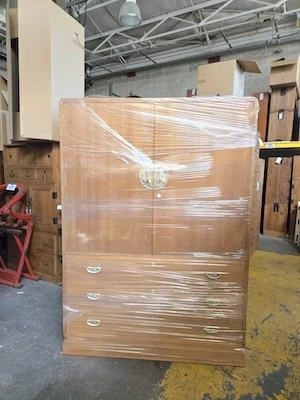
Each piece is carefully inspected, cleaned, and wrapped with protective plastic wrap.
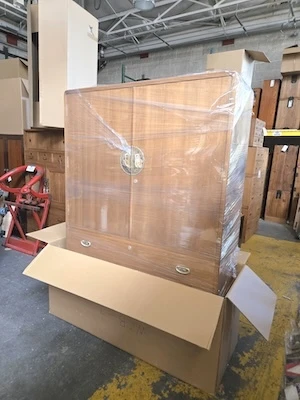
Styrofoam padding is placed at the bottom of the box, and the tansu is carefully positioned on top.
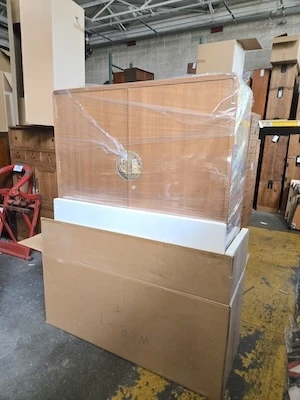
Additional Styrofoam is added around the tansu to protect all sides.
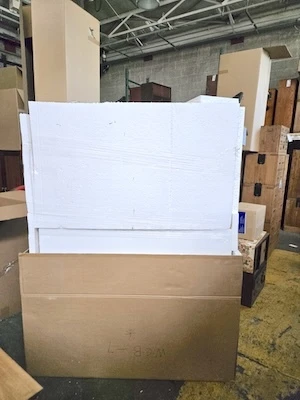
The piece is fully surrounded with Styrofoam and enclosed securely in a box.
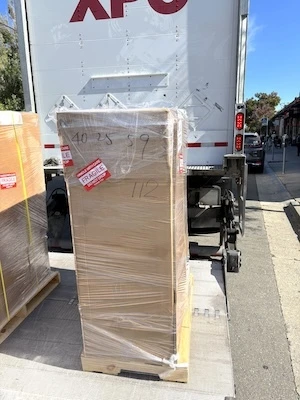
The boxed item is placed on a pallet and secured with poly banding straps for safe transport.
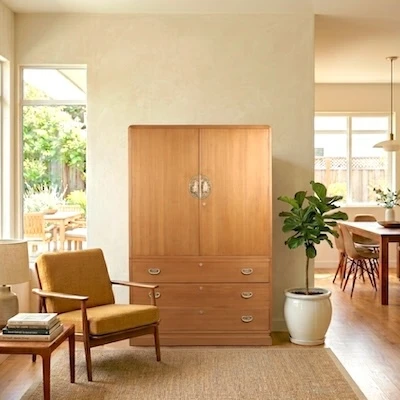
Arrives safely, ready to add warmth, history, and Japanese craftsmanship to your space.

A compact Meiji-era Japanese ko tansu featuring sliding doors, interior shelving, four drawers, and hand-worked iron hardware.
This antique Japanese ko tansu dates to the Meiji period (1868-1911) and offers a practical, compact form suited to everyday household storage. The upper section is fitted with two sliding doors that open to reveal interior shelves, while the lower section contains four drawers arranged in two side-by-side rows. The warm-toned wood grain is complemented by dark iron hardware, including corner brackets, drawer pulls, and side carrying handles, giving the piece a strong architectural presence and a time-softened character.
Its modest scale makes this cabinet easy to place in a variety of interiors. It works well as a small storage chest in a bedroom, study, or entryway, offering concealed space behind the sliding doors and convenient drawer storage below. The flat top provides room for a lamp, ceramics, or other decorative objects, making it a versatile accent for interiors that favor Japanese antiques, wabi-sabi warmth, or simple natural materials.
A handsome and useful Japanese antique with balanced proportions, practical storage, and classic Meiji-period ironwork.
We use professional studio lighting to highlight the natural character of the wood. As a result, the tone may appear slightly warmer than under natural daylight.
All antique items are sold as-is. Each piece may exhibit signs of age, including scratches, wear, or minor imperfections. These are not considered defects but natural evidence of the item’s authenticity and age.
Rest. & Insp. by: Akasabi in Japan
SKU: 26M-G045


Rest. & Insp. by: Harada in Japan
SKU: 26J-B025


Rest. & Insp. by: Harada in Japan
SKU: 26O-G0154
