


Antique Japanese Ko Tansu Small Chest With Multi-sized Warabite Pull Drawers - 1920s Taisho Era (25D-G016)
Rest. & Insp. by: Yamada in Japan
SKU: 25D-G016
Sold Out




 International Shipping Notice
 How We Pack Your Tansu
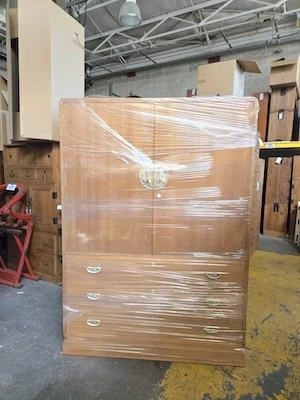
Each piece is carefully inspected, cleaned, and wrapped with protective plastic wrap.
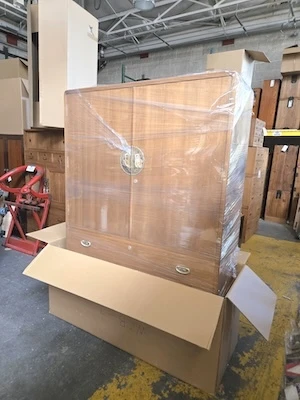
Styrofoam padding is placed at the bottom of the box, and the tansu is carefully positioned on top.
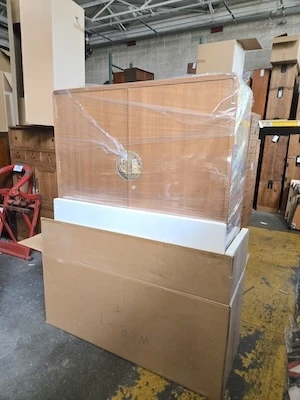
Additional Styrofoam is added around the tansu to protect all sides.
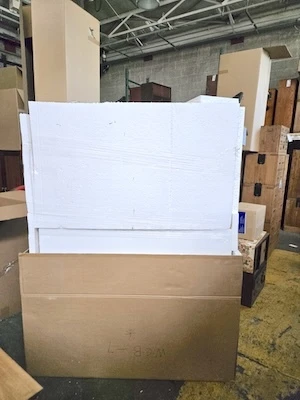
The piece is fully surrounded with Styrofoam and enclosed securely in a box.
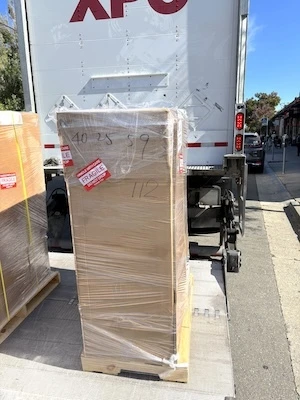
The boxed item is placed on a pallet and secured with poly banding straps for safe transport.
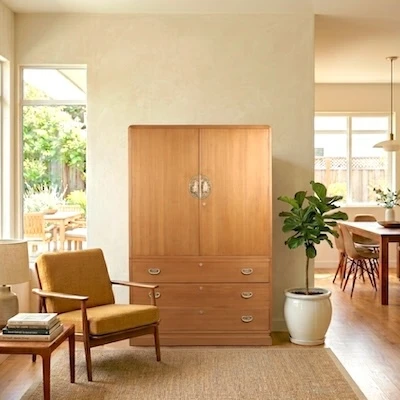
Arrives safely, ready to add warmth, history, and Japanese craftsmanship to your space.

Compact Meiji-era ko tansu with beautifully arranged multi-sized drawers and classic warabite pulls
This antique Japanese ko tansu (small chest) presents a harmonious balance of function and simplicity, with a warm kiri (paulownia) wood framed by robust black iron hardware. The façade is organized in a distinctive asymmetrical layout: a bank of wide drawers paired with a vertical stack of smaller drawers, each fitted with traditional warabite-style pulls that echo the understated refinement of Meiji-period cabinetry.
Designed originally as a personal storage chest, this piece works equally well today as an entry or tabletop tansu, media stand, or organizer for textiles and tableware. The hand-forged corner brackets, lock plates, and drawer pulls add graphic contrast against the softly patinated wood, while the clean lines and low profile make it an easy addition to both wabi-sabi interiors and modern minimalist spaces.
A versatile ko tansu that brings authentic Meiji-era craftsmanship and understated Japanese elegance to any room.
We use professional studio lighting to highlight the natural character of the wood. As a result, the tone may appear slightly warmer than under natural daylight.
All vintage and antique items are sold as-is. Each piece may exhibit signs of age, including scratches, wear, or minor imperfections. These are not considered defects but natural evidence of the item’s authenticity and age.
Rest. & Insp. by: Yamada in Japan
SKU: 25D-G016


Rest. & Insp. by: Harada in Japan
SKU: 25D-D005


Rest. & Insp. by: Yamada in Japan
SKU: 25D-G013


Rest. & Insp. by: Fukutsuka in Japan
SKU: 25D-G007
