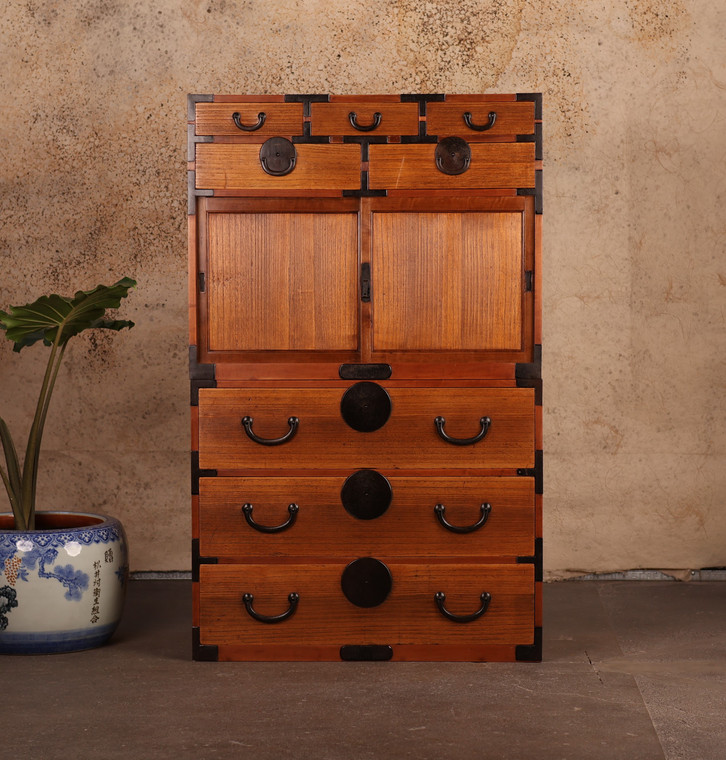
Choba Tansu, also known as a merchant chest, is a distinct type of Japanese furniture traditionally used by merchants during the Edo and Meiji periods. These chests were designed to store and organize important business documents, ledgers, money, and other valuables. Choba Tansu typically featured multiple drawers, sliding doors, and sometimes hidden compartments, reflecting the needs of the merchants for both security and accessibility.
Crafted from durable woods like Paulownia (Kirinoki) and often adorned with intricate metalwork, including iron handles and corner fittings, Choba Tansu not only served a functional purpose but also symbolized the merchant's prosperity and status. The design of the Choba Tansu was often simple yet elegant, with a focus on practicality, making it a prized piece in both historical and modern interiors.
In the case of this particular Choba Tansu from the mid Meiji period (1880s-1890s), its two-section construction allows for versatile use, such as placing them side by side as nightstands or end tables. The careful craftsmanship and attention to detail in the woodwork and metal fittings showcase the quality and durability expected from furniture of this era, making it a valuable piece of Japan's cultural heritage.





 Notify me about similar pieces