
Free Shipping





 International Shipping Notice
 How We Pack Your Tansu
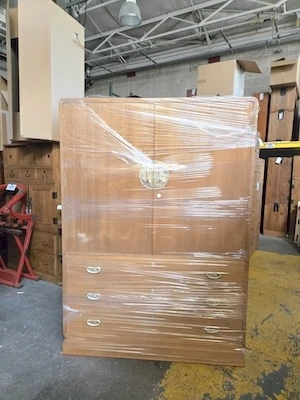
Each piece is carefully inspected, cleaned, and wrapped with protective plastic wrap.
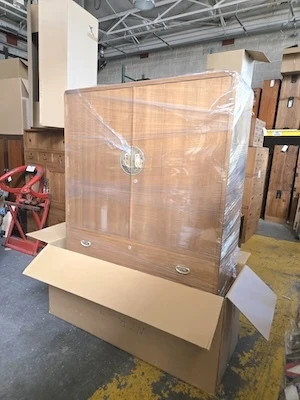
Styrofoam padding is placed at the bottom of the box, and the tansu is carefully positioned on top.
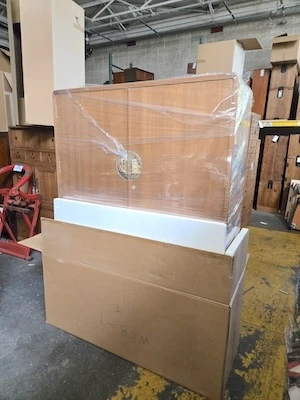
Additional Styrofoam is added around the tansu to protect all sides.
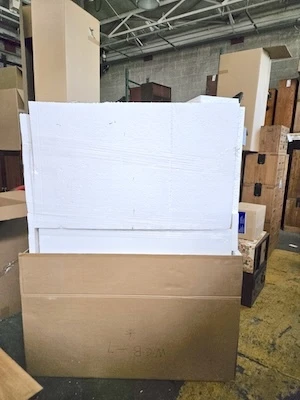
The piece is fully surrounded with Styrofoam and enclosed securely in a box.
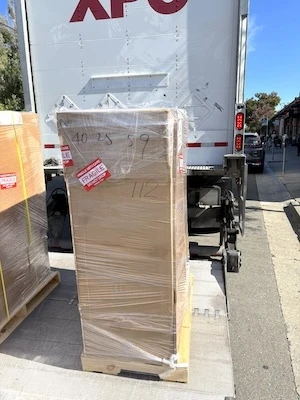
The boxed item is placed on a pallet and secured with poly banding straps for safe transport.
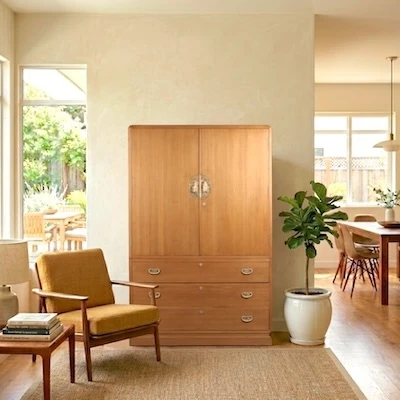
Arrives safely, ready to add warmth, history, and Japanese craftsmanship to your space.

A Karatsu-style stoneware chawan with ash glaze and iron-painted decoration, presented in its original signed wooden storage box.
A chawan is a Japanese tea bowl used in the preparation and drinking of matcha during the traditional tea ceremony, or chado. This wheel-thrown example works in the Karatsu tradition -- one of Japan's most revered ceramic lineages, originating in Saga Prefecture on the island of Kyushu. The bowl is covered in a cool, celadon-grey ash glaze that pools glossy in the interior and softens to a matte haze toward the lower body. Painted across its exterior are bold, irregular patches of iron-brown brushwork -- a hallmark of the e-karatsu ("picture Karatsu") style, in which iron oxide is applied freely over the raw clay before glazing, creating warm rust-toned motifs that emerge through the glaze firing. The sandy, unglazed foot ring reveals the coarse, iron-rich stoneware body beneath, grounding the piece in the wabi-sabi aesthetic that has always defined the finest Japanese tea ceramics. This is a compelling example of vintage Japanese craft ceramic at its most unpretentious and assured.
In today's home, this chawan invites multiple lives beyond the tea room. Display it as a living room accent on a shelf or tokonoma-style alcove alongside a single stem or a small stone -- its earthy palette and expressive brushwork make it a natural focal point in minimalist decor or Japandi style interiors. It works equally well as a small vessel for a succulent or as a desk organizer for a few favorite pens or trinkets in a home office. For collectors of Japanese vintage ceramics or admirers of the wabi-sabi aesthetic, it also makes a distinctive and memorable gift -- arriving complete with its original hakogaki wooden storage box, brush-inscribed in a style consistent with Karatsu chawan notation and bearing an artist seal, adding considerable provenance and display value. A thoughtful housewarming gift or a gift for Japanophiles who appreciate handcrafted Japanese pottery.
A quietly powerful piece of handcrafted Japanese pottery -- the wabi-sabi beauty of its iron-painted glaze and its complete hakogaki box make it a rare find for collectors and tea ceremony enthusiasts alike.
We use professional studio lighting to highlight the natural character of the wood. As a result, the tone may appear slightly warmer than under natural daylight.
All vintage items are sold as-is. Each piece may exhibit signs of age, including scratches, wear, or minor imperfections. These are not considered defects but natural evidence of the item’s authenticity and age.


SKU: 26J-0803-5
