

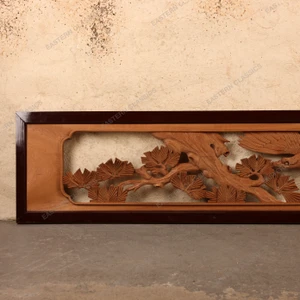
Vintage Japanese Ranma carved wood transom panel, Mid Showa 1946-1965 | SKU: 26J-0511-1
SKU: 26J-0511-1
$300.00




 International Shipping Notice
 How We Pack Your Tansu
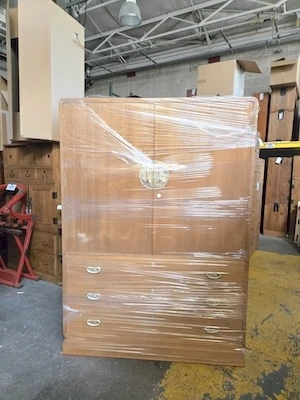
Each piece is carefully inspected, cleaned, and wrapped with protective plastic wrap.
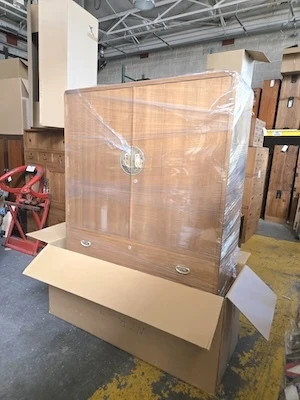
Styrofoam padding is placed at the bottom of the box, and the tansu is carefully positioned on top.
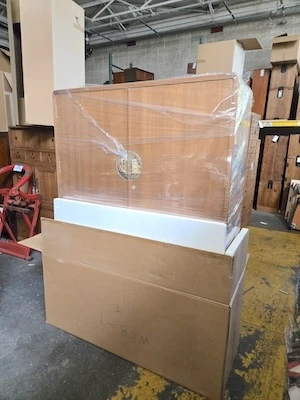
Additional Styrofoam is added around the tansu to protect all sides.
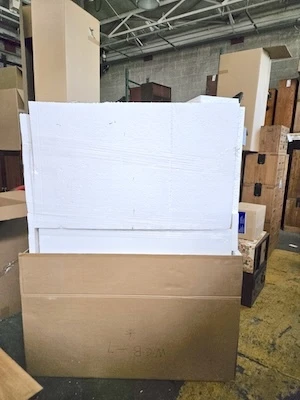
The piece is fully surrounded with Styrofoam and enclosed securely in a box.
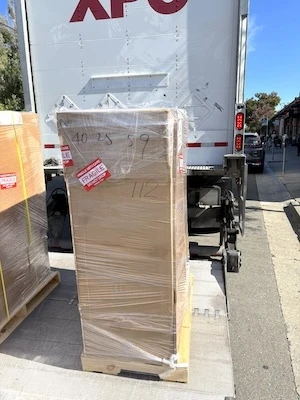
The boxed item is placed on a pallet and secured with poly banding straps for safe transport.
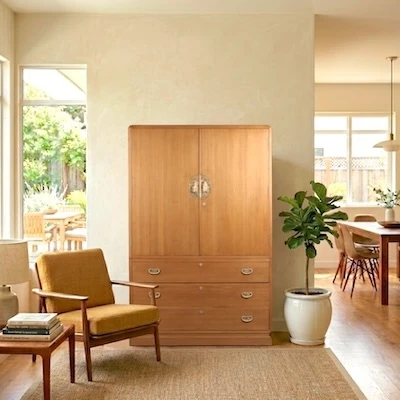
Arrives safely, ready to add warmth, history, and Japanese craftsmanship to your space.

A monumental openwork keyaki carving depicting auspicious figures amid pine and clouds -- a rare survivor of Japanese architectural craft.
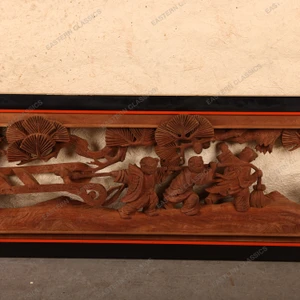
A ranma is a traditional Japanese architectural transom panel, fitted above sliding doors or room dividers to allow light and air to pass between interior spaces while adding a layer of sculptural beauty to the room. This exceptional example -- nearly six feet wide -- is carved in deep openwork relief from keyaki wood (zelkova), one of Japan's most prized hardwoods, known for its fine grain and warm honey-brown tone. The composition spans the full length of the panel and depicts multiple auspicious figures consistent with the Shichifukujin, Japan's beloved Seven Lucky Gods: a plump, smiling deity reclining amid treasure bales and raising a mallet and gourd aloft; a bearded elder in layered robes accompanied by a large fish; a graceful female figure resting beneath pine boughs with pine cones above; and further robed figures emerging from swirling clouds and gnarled pine branches. The carving achieves remarkable depth -- foreground figures project boldly while fine details such as feathers, textile folds, and pine needle fans are rendered with a carver's precision. The whole is set within a lacquered frame of contrasting black and vermilion red, a classic Japanese color pairing that gives this vintage Japanese architectural panel exceptional visual presence.
Removed from its original architectural setting, this ranma panel transitions effortlessly into a modern home as a large-format statement piece. Mounted horizontally on a living room or entryway wall, it functions as a striking work of Japanese wall art that rivals any painted canvas -- the natural warmth of the keyaki wood and the depth of the openwork carving create a play of light and shadow that changes throughout the day. It would make a dramatic focal point above a console table or sideboard in a Japandi-style interior, or could anchor a meditation room, home office feature wall, or dining room accent. At nearly six feet long, it commands attention without overwhelming a space, and its rich iconography of good fortune and abundance makes it a genuinely meaningful housewarming gift or collector's centerpiece for any Japanophile.
A commanding piece of Japanese vintage architectural art -- handcrafted in keyaki wood and rich with symbolism -- that brings the warmth, craftsmanship, and good fortune of traditional Japan into any modern interior.
We use professional studio lighting to highlight the natural character of the wood. As a result, the tone may appear slightly warmer than under natural daylight.
All vintage items are sold as-is. Each piece may exhibit signs of age, including scratches, wear, or minor imperfections. These are not considered defects but natural evidence of the item’s authenticity and age.
SKU: 26J-0511-1



SKU: 26J-0767-1


