






 International Shipping Notice
 How We Pack Your Tansu
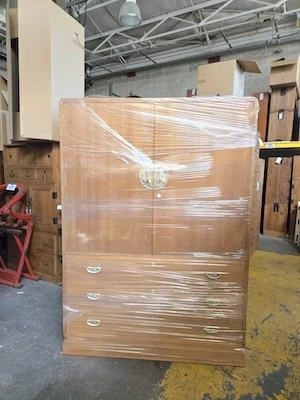
Each piece is carefully inspected, cleaned, and wrapped with protective plastic wrap.
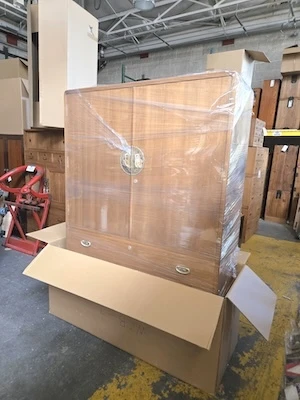
Styrofoam padding is placed at the bottom of the box, and the tansu is carefully positioned on top.
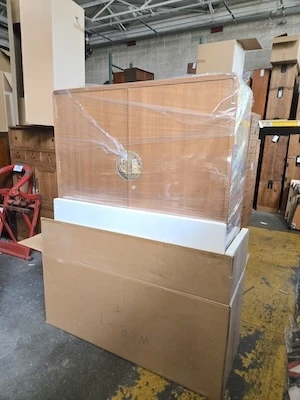
Additional Styrofoam is added around the tansu to protect all sides.
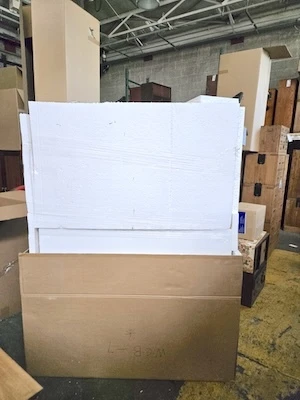
The piece is fully surrounded with Styrofoam and enclosed securely in a box.
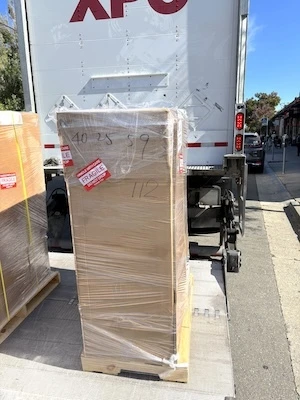
The boxed item is placed on a pallet and secured with poly banding straps for safe transport.
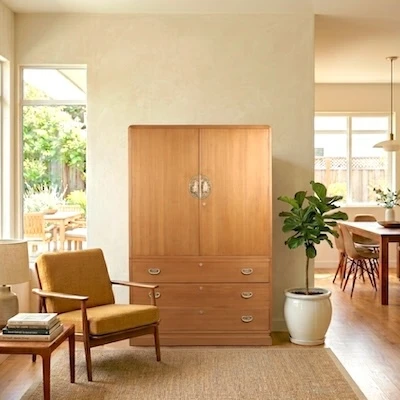
Arrives safely, ready to add warmth, history, and Japanese craftsmanship to your space.

A bold mid-century shop sign for "Ume no En" -- a premium Japanese tea brand -- rendered in striking red and green enamel on iron.
A Japanese enamel advertising sign (horoban) is a vitreous-enamel-coated iron placard produced for commercial display at tea shops, market stalls, and street-facing storefronts across postwar Japan. This example promoted "Ume no En" (Plum Garden), advertised here as a purveyor of "kokyuu meicha" -- high-grade named tea -- a designation reserved for premium single-origin or blended teas of distinguished character. The sign is laid out in a classic two-zone composition: a deep forest-green header band carries the product category in crisp white lettering, while the lower white field displays the brand name in bold, brushstroke-style red characters that command attention from across a busy street or market. Two metal grommets punched through the green band retain the original jute hanging cord, confirming this was intended for suspended display. The enamel surface remains largely intact, with minor edge chipping and light surface rust at the corners consistent with decades of outdoor or semi-outdoor use -- all authentic markers of vintage Japanese commercial ephemera.
Today this sign makes a compelling piece of living room wall decor or kitchen accent for collectors of Japanese vintage pieces, mid-century graphic design, and vintage advertising art. Its compact size and original hanging cord make it easy to display on a gallery wall, in a tea room, or as a focal point in a Japandi-style interior. The bold red-and-green palette pairs naturally with natural wood shelving, ceramic tea ware, or minimalist decor. It would make a distinctive housewarming gift or a unique gift for Japanophiles and collectors of vintage Japanese ephemera -- a rare survivor of postwar consumer culture that tells the story of Japan's thriving tea trade in a single glance.
A vivid relic of Japan's postwar tea culture -- this vintage enamel advertising sign brings authentic mid-century Japanese graphic character to any modern home or collection.
We use professional studio lighting to highlight the natural character of the wood. As a result, the tone may appear slightly warmer than under natural daylight.
All vintage items are sold as-is. Each piece may exhibit signs of age, including scratches, wear, or minor imperfections. These are not considered defects but natural evidence of the item’s authenticity and age.


