
Free Shipping




Do you like this piece?
We’ll let you know when we have a similar item.
 Notify me about similar pieces

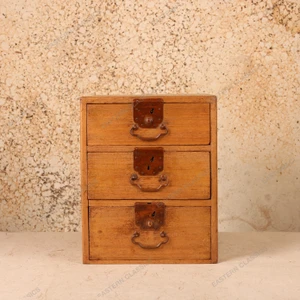
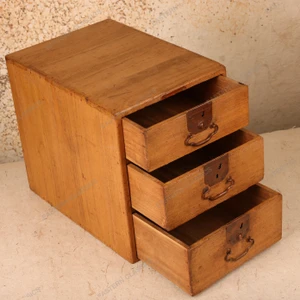
A handcrafted Japanese glass display cabinet with sliding panels and hidden lower storage -- warm knotty wood, pre-war character.
A garasudo cabinet is a traditional Japanese glass-fronted display case, widely used in Meiji- and Showa-era homes, teahouses, and small shops to showcase ceramics, lacquerware, confections, or curios behind sliding glass panels. This example -- dating to the Early Showa period, circa 1927-1945 -- is built from knotty softwood, likely matsu (pine), with a straight tight grain visible across the top panel and corner posts. The construction is honest and utilitarian: square-cut joinery at the corners, smooth sliding tracks on both the glass upper section and the solid wood lower section, and a fixed interior shelf dividing the glazed display area into upper and lower tiers. The aged honey-amber patina across the frame and lower panels speaks to decades of careful use, making this a genuine piece of vintage Japanese craft with the unhurried warmth that defines the wabi-sabi aesthetic.
In a modern home, this cabinet is as versatile as it is characterful. Stand it in a living room as a curio cabinet to display pottery, books, or collected objects behind dust-free glass -- a natural fit for Japandi-style or minimalist decor. In a home office or studio, the open shelving and enclosed lower compartment offer practical storage with a handsome face. It also works beautifully as entryway furniture -- shoes or accessories tucked behind the lower sliding panels, a seasonal arrangement or small sculpture showcased above. Its compact footprint and all-around glass panels mean it reads well from multiple angles, making it a unique housewarming gift or a standout find for collectors of Japanese vintage furniture.
A rare and room-ready piece of Japanese vintage furniture -- pre-war craftsmanship and wabi-sabi warmth in one beautifully proportioned display cabinet.
We use professional studio lighting to highlight the natural character of the wood. As a result, the tone may appear slightly warmer than under natural daylight.
All vintage items are sold as-is. Each piece may exhibit signs of age, including scratches, wear, or minor imperfections. These are not considered defects but natural evidence of the item’s authenticity and age.


SKU: 26J-C0055


SKU: 26J-C0418
