



Do you like this piece?
We’ll let you know when we have a similar item.
 Notify me about similar pieces

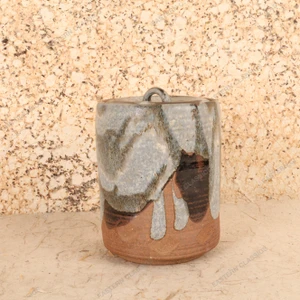
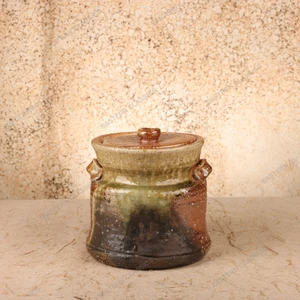
A signed artist piece in hakuji porcelain -- celadon wash, scattered gold motifs, and a lacquered wooden lid speak quietly of the chado tradition.
A mizusashi is the fresh-water jar used in the Japanese tea ceremony (chado) to replenish the iron kettle and rinse utensils -- one of the most visually prominent vessels on the tatami. This fine example is rendered in hakuji (white porcelain) with a soft celadon-blue gradient that sweeps across the lower body like a breath of mist over still water. Scattered across the shoulder are small abstract gold motifs, applied with restrained precision, evoking fallen ginkgo leaves or petals drifting on a lake. The interior is a luminous, unadorned white, and the piece rests on a subtly recessed foot. It comes with its original lacquered wooden lid fitted with a small ring pull, and retains its signed wooden storage box (hakobako) -- a strong mark of artist provenance. The box inscription identifies this as a hakuji mizusashi, consistent with the ceramic tradition of mid-to-late Showa studio potters who blended classical form with painterly glaze expression.
In a modern home, this handcrafted Japanese ceramic becomes an effortless living room accent or shelf display -- its soft blue-white palette and gold detailing complement both Japandi style interiors and minimalist decor. Display it lidded on a sideboard or entry console as a sculptural focal point, or use it open as a small vase for a single stem arrangement. It also makes a thoughtful and unique gift for collectors of Japanese antique ceramics, tea ceremony enthusiasts, or anyone who appreciates wabi-sabi aesthetic in everyday objects. The inclusion of its original hakobako adds collector value and makes presentation effortless.
A collector-quality piece of Japanese antique teaware -- serene, signed, and complete with its original box -- ready to bring the quiet elegance of chado into any modern space.
We use professional studio lighting to highlight the natural character of the wood. As a result, the tone may appear slightly warmer than under natural daylight.
All vintage and antique items are sold as-is. Each piece may exhibit signs of age, including scratches, wear, or minor imperfections. These are not considered defects but natural evidence of the item’s authenticity and age.