

 International Shipping Notice
 How We Pack Your Tansu
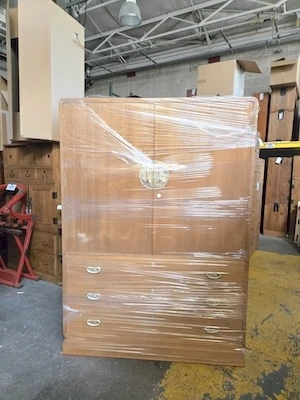
Each piece is carefully inspected, cleaned, and wrapped with protective plastic wrap.
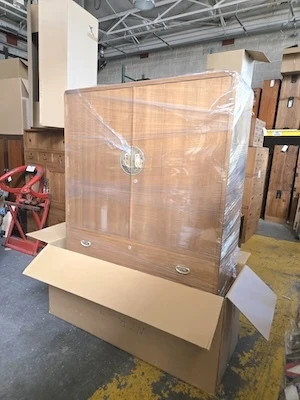
Styrofoam padding is placed at the bottom of the box, and the tansu is carefully positioned on top.
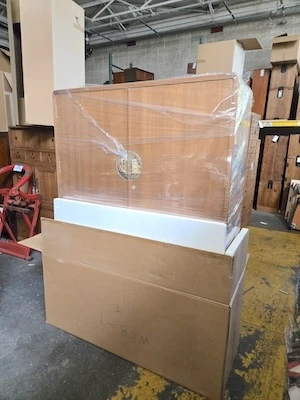
Additional Styrofoam is added around the tansu to protect all sides.
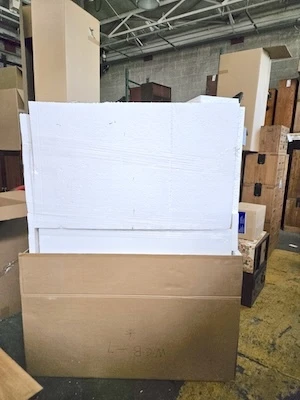
The piece is fully surrounded with Styrofoam and enclosed securely in a box.
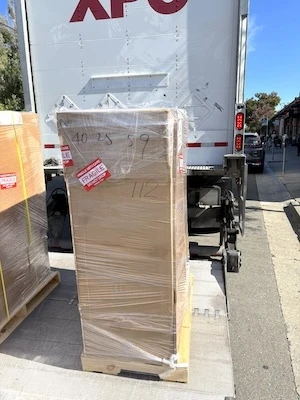
The boxed item is placed on a pallet and secured with poly banding straps for safe transport.
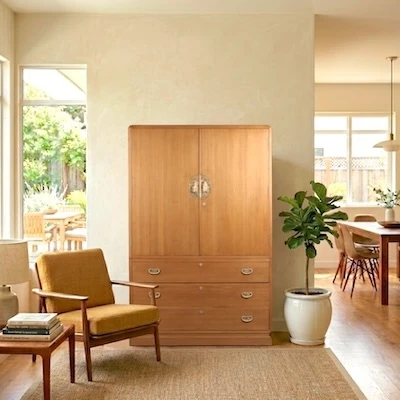
Arrives safely, ready to add warmth, history, and Japanese craftsmanship to your space.

A hand-molded clay onigawara adorned with swirling kumo cloud relief -- a fragment of traditional Japanese temple and shrine architecture.
An onigawara is a decorative ridge-end roof tile used in traditional Japanese architecture to cap the eaves of temples, shrines, and grand residential buildings, serving both a protective and apotropaic function. This example is a kumo-mon (cloud-motif) variant, its face sculpted in bold, swirling relief that cascades across the surface in rolling spirals -- a motif long associated with divine grace and the heavens in Japanese Buddhist iconography. Fired from dense gray clay in the time-honored tradition of Japanese roof tile craft, the piece displays the characteristic matte charcoal finish achieved through a reduction-firing technique known as ibu-shi, which imparts the signature smoky, blue-gray patina collectors prize. The reverse side reveals the hollow structural cavity and mounting holes used to secure the tile to the roof ridge, offering a fascinating glimpse into traditional Japanese building practice. As a piece of vintage Japanese architectural salvage, it carries the kind of tactile history that simply cannot be reproduced.
Salvaged from a now-demolished building, this onigawara makes a striking living room accent or garden sculpture in a Japandi-style or wabi-sabi aesthetic interior. Its sculptural cloud relief and weathered gray surface pair naturally with raw stone, aged wood, and ceramic objects, making it an ideal display piece on a bookshelf, entryway console, or outdoor garden plinth. It would also serve beautifully as a planter base or paperweight-style desk accent for a home office with a curated, collected feel. A truly unique gift for collectors of Japanese antiques, architecture enthusiasts, or anyone who appreciates the intersection of craft and history.
A rare piece of Japanese antique architectural craft -- the onigawara brings centuries of sacred symbolism and artisan tradition into any modern home or garden.
We use professional studio lighting to highlight the natural character of the wood. As a result, the tone may appear slightly warmer than under natural daylight.
All vintage and antique items are sold as-is. Each piece may exhibit signs of age, including scratches, wear, or minor imperfections. These are not considered defects but natural evidence of the item’s authenticity and age.