






Do you like this piece?
We’ll let you know when we have a similar item.
 Notify me about similar pieces

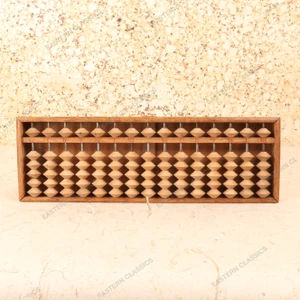
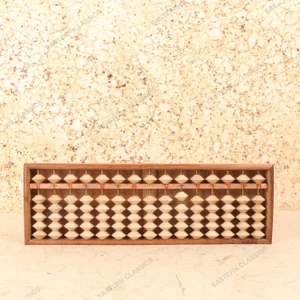
A large-format vintage Japanese soroban -- a working vintage calculating tool with striking sculptural presence.
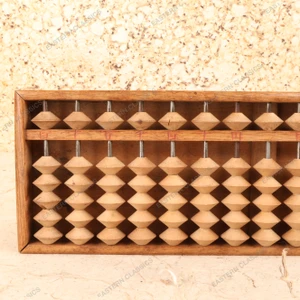
A soroban is the traditional Japanese abacus, refined over centuries from its Chinese predecessor and formalized as Japan's primary calculation instrument through the modern era. This Early Showa period example is a substantial, professional-grade soroban featuring multiple columns of hand-turned bicone beads threaded on metal rods, set within a sturdy hardwood frame divided by the classic reckoning bar. Each bead is precisely lathe-turned in a warm natural wood, contrasting beautifully against the darker stained frame. Soroban of this size were standard tools in merchant houses, government offices, and schools during the pre-war and wartime years, when skilled operators could outpace mechanical calculators with practiced ease. This is a fine example of vintage Japanese craft -- handcrafted Japanese mathematical tools from this era are increasingly sought by collectors of Japanese vintage objects and educational artifacts.
Today this soroban makes a remarkable decorative piece for a modern home or workspace. Displayed horizontally on a bookshelf or desk, it reads as a richly textured sculptural object -- its rhythmic grid of pale bicone beads has a quiet, wabi-sabi aesthetic that suits Japandi style interiors effortlessly. Lean it vertically against a wall as a living room accent or mount it as a statement piece in a home office or study. It also makes a unique gift for collectors, math enthusiasts, or anyone with an appreciation for Japanese cultural history. Whether used as a working abacus, a display piece, or a conversation-starting living room accent, this soroban brings genuine Showa-era character to any space.
A beautifully preserved piece of Japanese vintage calculating history -- as sculptural as it is historic, and a natural fit for any Japandi or wabi-sabi inspired interior.
We use professional studio lighting to highlight the natural character of the wood. As a result, the tone may appear slightly warmer than under natural daylight.
All vintage items are sold as-is. Each piece may exhibit signs of age, including scratches, wear, or minor imperfections. These are not considered defects but natural evidence of the item’s authenticity and age.