
Free Shipping
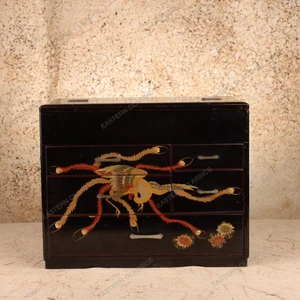

Antique Japanese Haribako Sewing Box, 1927 - 1945 (Early Showa) | SKU: 26M-556-14
SKU: 26M-556-14
$330.00




Do you like this piece?
We’ll let you know when we have a similar item.
 Notify me about similar pieces

A beautifully compact Japanese haribako sewing box with a lift-top compartment, graduated drawers, and richly patterned kaki persimmon drawer fronts framed by darker wood.
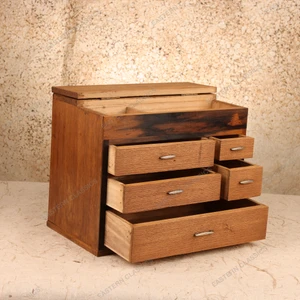
A haribako is a traditional Japanese sewing box designed to keep needles, thread, cloth tools, and other small household essentials neatly arranged in one place. This example, dating to the early Showa period (1927-1945), has a practical rectangular form with a hinged top opening to a long upper compartment fitted with simple dividers. Below are four drawers arranged in an asymmetric layout: two narrow drawers at left, one small drawer at right, and one wider bottom drawer. The fronts display striking kaki persimmon grain, while the case sides and top are finished in a darker tone that gives the piece a warm two-tone character. Simple metal pulls and understated hardware complete the design.
In a modern home, this vintage Japanese haribako remains wonderfully useful. It can still serve its original purpose as a sewing or mending box, with the upper compartment ideal for thread spools, scissors, and notions, and the drawers perfect for needles, fabric scraps, patterns, or small tools. It also works beautifully on a desk, vanity, or shelf as an organizer for stationery, jewelry, keepsakes, or craft supplies. Its compact size and handsome wood grain make it an appealing accent for Japandi, wabi-sabi, and other interiors that value quiet craftsmanship and everyday utility.
A charming and functional piece of vintage Japanese craftsmanship, bringing warmth, history, and practical storage to everyday living.
We use professional studio lighting to highlight the natural character of the wood. As a result, the tone may appear slightly warmer than under natural daylight.
All vintage items are sold as-is. Each piece may exhibit signs of age, including scratches, wear, or minor imperfections. These are not considered defects but natural evidence of the item’s authenticity and age.
SKU: 26M-556-14


SKU: 26M-556-4

SKU: 26M-556-11


SKU: 26M-556-10
