Vintage Japanese Lacquered Chabudai Low Table, Early Showa 1927-1945 | SKU: 26M-722
SKU: 26M-722
$150.00




 International Shipping Notice
 How We Pack Your Tansu
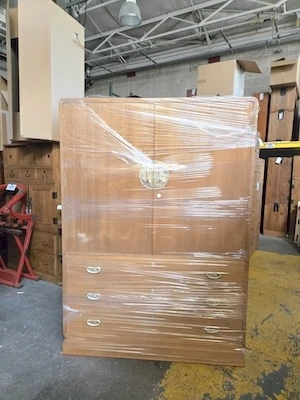
Each piece is carefully inspected, cleaned, and wrapped with protective plastic wrap.
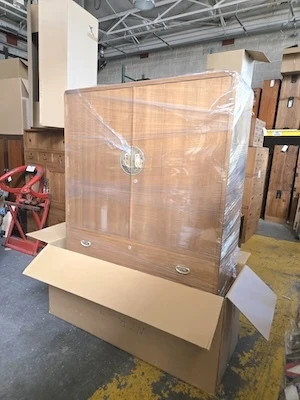
Styrofoam padding is placed at the bottom of the box, and the tansu is carefully positioned on top.
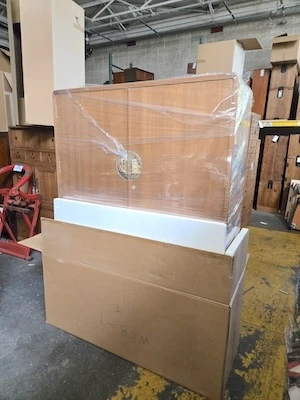
Additional Styrofoam is added around the tansu to protect all sides.
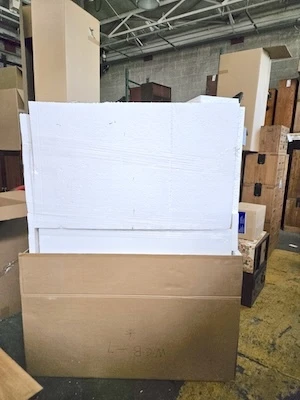
The piece is fully surrounded with Styrofoam and enclosed securely in a box.
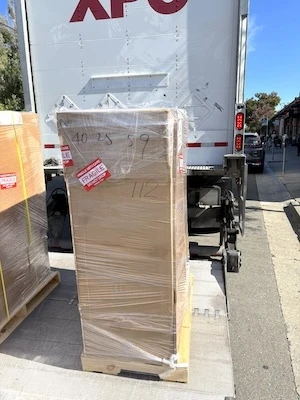
The boxed item is placed on a pallet and secured with poly banding straps for safe transport.
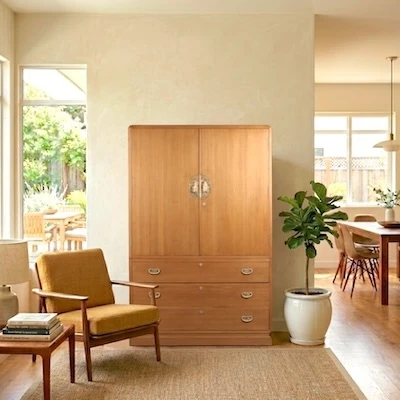
Arrives safely, ready to add warmth, history, and Japanese craftsmanship to your space.

A rare matched set of finely lacquered wooden bowls adorned with gold makie motifs of sailing ships on rolling waves -- presented in their original wooden storage box.
A makie wan (lacquerware bowl) is a traditional Japanese wooden bowl finished in urushi lacquer and decorated using the makie technique, in which gold or metallic powder is sprinkled onto wet lacquer to build up luminous pictorial designs. Produced during the Early Showa period, this matched set exemplifies the refined craftsmanship of vintage Japanese lacquerware at its most expressive. The larger bowls carry a deep, mirror-polished black exterior with a maker's mark inscribed in gold at the base, while the smaller bowls -- likely used for side dishes or accompaniments -- feature a dramatic interior scene of tall-masted sailing ships (hobune) cutting through stylized waves rendered in fine gold makie. The exterior of those bowls displays scattered gold motifs of pavilions and willow branches, adding layered visual interest. The set arrives complete with its original kiri (paulownia) wood storage box, which bears brushed ink inscription -- a hallmark of a quality presentation set likely commissioned for formal dining or ceremonial occasions.
In today's home, this handcrafted Japanese lacquerware set makes a stunning statement far beyond the dining table. Display the bowls individually as living room accent pieces or grouped on a shelf to evoke a wabi-sabi aesthetic. The larger bowls work beautifully as jewelry or key catchers in an entryway, while the smaller decorated bowls serve as striking ring dishes or incense holders in a bedroom or home office. Collectors of Japanese vintage tableware and Japandi-style interiors will appreciate the visual weight of this black-and-gold palette. The set also makes a memorable gift for Japanophiles, collectors, or anyone drawn to the timeless beauty of East Asian decorative arts.
A collector-quality set of vintage Japanese makie lacquerware -- where centuries of urushi craft tradition meet the quiet drama of gold on black.
We use professional studio lighting to highlight the natural character of the wood. As a result, the tone may appear slightly warmer than under natural daylight.
All vintage items are sold as-is. Each piece may exhibit signs of age, including scratches, wear, or minor imperfections. These are not considered defects but natural evidence of the item’s authenticity and age.
SKU: 26M-722