








 International Shipping Notice
 How We Pack Your Tansu
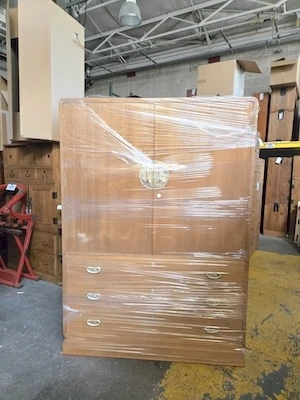
Each piece is carefully inspected, cleaned, and wrapped with protective plastic wrap.
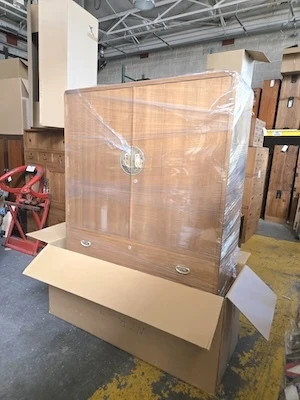
Styrofoam padding is placed at the bottom of the box, and the tansu is carefully positioned on top.
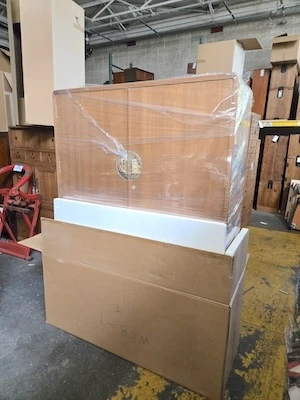
Additional Styrofoam is added around the tansu to protect all sides.
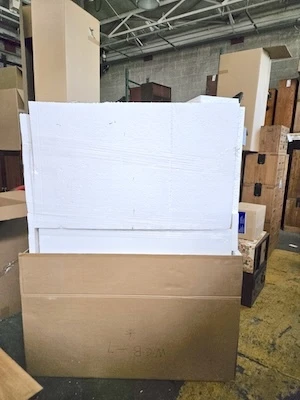
The piece is fully surrounded with Styrofoam and enclosed securely in a box.

The boxed item is placed on a pallet and secured with poly banding straps for safe transport.
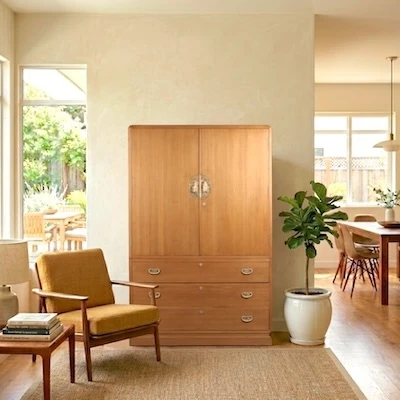
Arrives safely, ready to add warmth, history, and Japanese craftsmanship to your space.

A hauntingly beautiful root-wood vessel shaped by nature and refined by hand -- a rare Japanese antique for collectors of wabi-sabi art.
A ne-bachi (root vessel) is a traditional Japanese art object in which a naturally sculpted tree root or burl is selected, cleaned, and lightly worked by craftsmen to serve as a display vessel for ikebana flower arrangements or as a companion piece in bonsai display alcoves (tokonoma). Unlike carved objects, the form of a ne-bachi is largely dictated by the wood itself -- twisted cavities, reaching branch stubs, and flowing grain are all celebrated rather than corrected. This example, dating to the Early Showa period, showcases a dramatically hollowed root form with sweeping organic curves, jagged upward projections, and open voids that create striking light and shadow play from every angle. The underside reveals a fitted flat wooden base secured with small brass screws -- a hallmark of careful Japanese craft -- providing stability while preserving the wild silhouette above. The rich, deeply oiled dark brown surface suggests the wood may be a dense hardwood, possibly keyaki (zelkova) or a similarly figured species prized for its natural luster.
Today this extraordinary piece transcends its original ikebana or bonsai context and works beautifully as a standalone sculptural accent in a modern interior. Display it on a console table, fireplace mantel, or low credenza as a living room accent that embodies the wabi-sabi aesthetic -- celebrating imperfection, age, and the beauty of natural form. Tuck a small succulent, air plant, or moss arrangement into one of its natural cavities for a Japandi-style centerpiece that bridges the antique and the contemporary. It also makes a truly unique gift for collectors, Japanophiles, or anyone who appreciates handcrafted Japanese antiques with genuine character and history.
A rare and evocative piece of Japanese antique craft -- where nature did most of the sculpting, and time did the rest.
We use professional studio lighting to highlight the natural character of the wood. As a result, the tone may appear slightly warmer than under natural daylight.
All vintage and antique items are sold as-is. Each piece may exhibit signs of age, including scratches, wear, or minor imperfections. These are not considered defects but natural evidence of the item’s authenticity and age.


