






 International Shipping Notice
 How We Pack Your Tansu
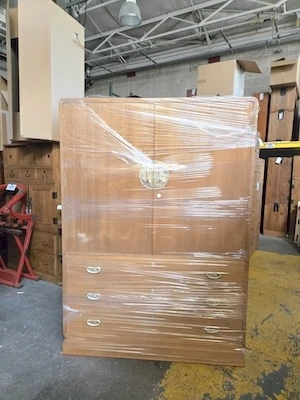
Each piece is carefully inspected, cleaned, and wrapped with protective plastic wrap.
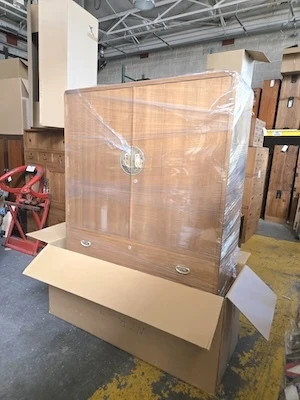
Styrofoam padding is placed at the bottom of the box, and the tansu is carefully positioned on top.
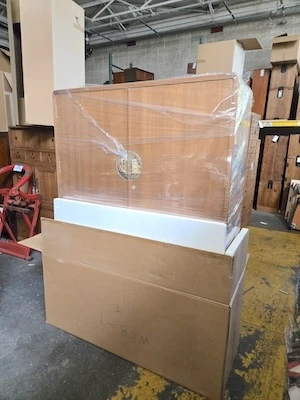
Additional Styrofoam is added around the tansu to protect all sides.
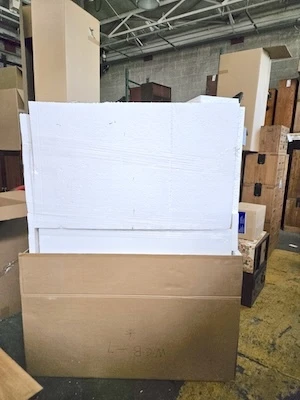
The piece is fully surrounded with Styrofoam and enclosed securely in a box.
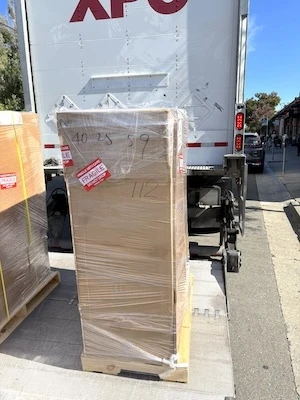
The boxed item is placed on a pallet and secured with poly banding straps for safe transport.
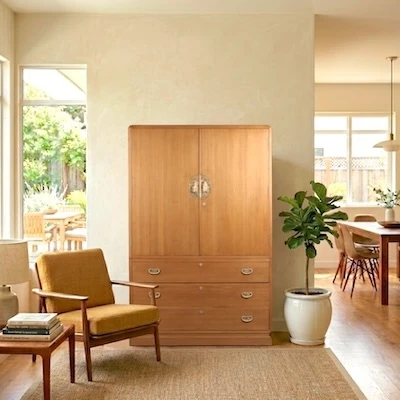
Arrives safely, ready to add warmth, history, and Japanese craftsmanship to your space.

A finely woven split-bamboo sudare with decorative cord patterning and patterned fabric edging -- a graceful example of vintage Japanese craft.
A sudare is a traditional Japanese roll-up screen or blind, historically hung in doorways, windows, and verandas to filter light, encourage airflow, and provide a gentle sense of privacy without fully closing off a space. This example is constructed from densely arranged thinly split bamboo slats in warm honey-brown tones, laced together with dark cord that traces fluid, wavy lines across the face of the blind -- creating an elegant repeating hourglass motif that gives the piece a lively, almost textile-like visual rhythm. The upper edge is finished with a sturdy natural bamboo rod from which the screen hangs via original metal hooks, and all four sides are bordered with a woven fabric ribbon displaying a repeating floral and geometric pattern in terracotta red and indigo blue -- a finishing touch that elevates this from everyday utility object to a handcrafted Japanese vintage blind of genuine decorative merit.
In a modern home, this sudare is as versatile as it is beautiful. Hang it in a bedroom or living room window as a natural light filter that casts warm, dappled shadows -- a perfect accent for Japandi style or wabi-sabi aesthetic interiors. Use it as a lightweight room divider or entryway screen to define zones in an open-plan space without sacrificing airflow. It also makes a striking piece of wall art when displayed flat, adding texture and organic warmth to a minimalist decor scheme. A thoughtful and unique gift for collectors of Japanese vintage furniture or for Japanophiles who appreciate the quiet elegance of everyday objects made with care.
A beautifully crafted piece of vintage Japanese bamboo work that brings natural warmth, quiet pattern, and the timeless wabi-sabi aesthetic into any modern living space.
We use professional studio lighting to highlight the natural character of the wood. As a result, the tone may appear slightly warmer than under natural daylight.
All vintage items are sold as-is. Each piece may exhibit signs of age, including scratches, wear, or minor imperfections. These are not considered defects but natural evidence of the item’s authenticity and age.


SKU: 26J-0773


SKU: 26M-971-1


SKU: 26M-971-2
