
Free Shipping


Vintage Japanese Tea Ceremony Utensils, 1966 - 1989 (Late Showa) | SKU: 26M-850-4
SKU: 26M-850-4
$120.00



Do you like this piece?
We’ll let you know when we have a similar item.
 Notify me about similar pieces
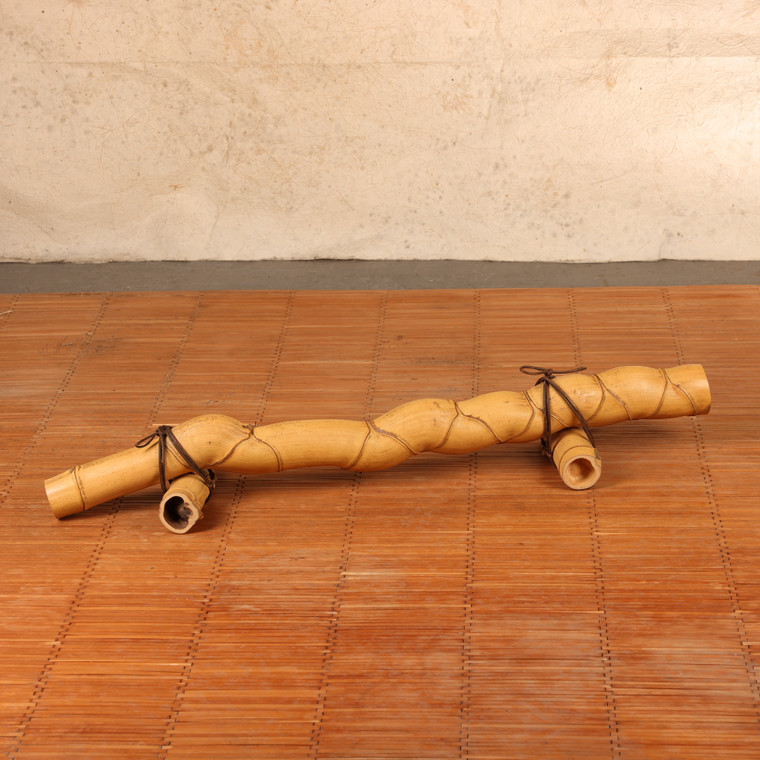
A sculptural Japanese bamboo kekkai used in tea ceremony -- natural form, quiet presence, and refined wabi-sabi character from the Late Showa period.
A kekkai is a traditional Japanese boundary marker or low room divider used in tea ceremony settings to subtly define space. Rather than functioning as a tall privacy screen, a kekkai creates a quiet visual boundary within a tearoom or ceremonial setting, often separating the host’s preparation area from the guest space or marking an intentional transition within the room. This vintage Japanese example dates to the Late Showa period (1966-1989) and is crafted from naturally shaped bamboo with a warm honey-golden tone and beautifully irregular surface.
The main bamboo body has a gentle organic curve, with visible nodes and natural variations that give the piece a distinctly wabi-sabi presence. Two smaller bamboo supports beneath the body allow it to rest low and horizontally, while dark cord bindings secure the elements together and add a rustic handcrafted detail. The beauty of this piece lies in its simplicity: the natural bamboo form, subtle asymmetry, and quiet material presence reflect the restrained elegance valued in Japanese tea ceremony.
In a modern home, this vintage kekkai works beautifully as a low decorative divider, tea room accent, or sculptural bamboo object. Place it in an entryway, living room, meditation space, studio, or garden-inspired interior to create a gentle visual boundary and bring natural warmth to the room. It pairs especially well with tatami, stoneware ceramics, ikebana arrangements, low wood furniture, and interiors inspired by Japandi style, wabi-sabi aesthetics, or traditional Japanese tea culture.
Origin: Japan
Era: 1966-1989 (Late Showa)
Material: Kikkou chiku (亀甲竹) "Tortoise-shell bamboo"
Use: Kekkai -- a low boundary divider used in Japanese tea ceremony settings
Modern Use: Tea room accent; low decorative room divider; entryway or living room display; meditation space accent; sculptural bamboo decor for Japandi or wabi-sabi interiors
Features: Naturally curved bamboo body; warm honey-golden bamboo surface; visible nodes and organic texture; two lower bamboo support elements; dark cord bindings; low horizontal form; lightweight sculptural presence; age-worn patina throughout
Dimensions: --
Condition: Excellent
A quiet and expressive piece of vintage Japanese tea ceremony craft -- simple in form, rich in meaning, and beautifully suited for creating a sense of calm and intentional space.
As part of our mission to preserve and share Japanese craftsmanship, we offer vintage pieces that were made not just to be admired, but to be used. These pieces were crafted for everyday life and ceremony, and we honor their purpose by ensuring they can continue to be enjoyed and lived with today.
We use professional studio lighting to highlight the natural character of the bamboo. As a result, the tone may appear slightly warmer than under natural daylight.
All vintage items are sold as-is. Each piece may exhibit signs of age, including scratches, wear, or minor imperfections. These are not considered defects but natural evidence of the item’s authenticity and age.
SKU: 26M-850-4


SKU: 26M-024


SKU: 26M-848-3


