


Vintage Japanese Cha Tansu Tea Chest, 1946 - 1965 (Mid Showa) | SKU: 26M-C041
SKU: 26M-C041
Sold Out



 International Shipping Notice
 How We Pack Your Tansu
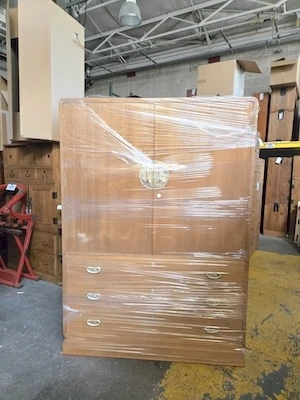
Each piece is carefully inspected, cleaned, and wrapped with protective plastic wrap.
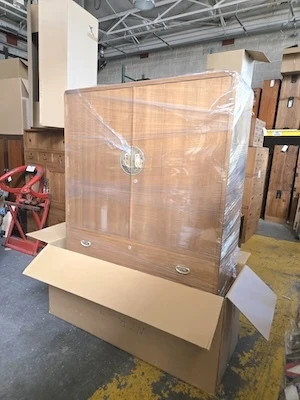
Styrofoam padding is placed at the bottom of the box, and the tansu is carefully positioned on top.
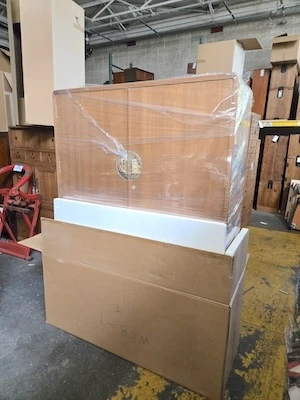
Additional Styrofoam is added around the tansu to protect all sides.
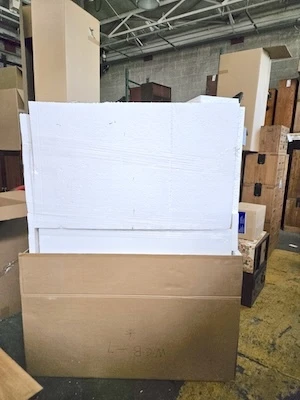
The piece is fully surrounded with Styrofoam and enclosed securely in a box.
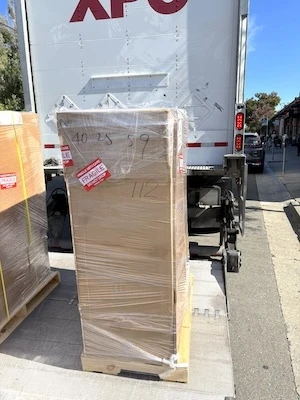
The boxed item is placed on a pallet and secured with poly banding straps for safe transport.
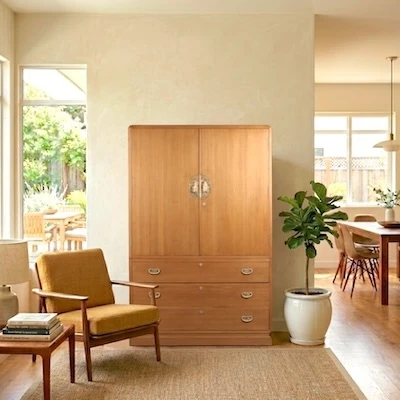
Arrives safely, ready to add warmth, history, and Japanese craftsmanship to your space.

A beautifully composed mid-century Japanese tea chest with burl-veneered sliding doors, shoji-panel display compartments, and carved kacho cutwork sides -- a rare collector's piece of handcrafted Japanese antique furniture.
A cha tansu is a traditional Japanese tea chest designed to organize and display the implements of the tea ceremony -- canisters, utensils, linens, and seasonal wares -- while presenting them with understated elegance. This example, dating to the Mid Showa period, is a fine specimen of vintage Japanese craft: the carcass is constructed from a warm amber-toned hardwood, likely sugi (Japanese cedar) or nara (Japanese oak), while the sliding door panels and drawer fronts are dressed in a richly swirling burl veneer -- possibly tochi (horse chestnut) -- that gives each panel a painterly, almost abstract quality. Upper sliding doors are fitted with translucent shoji-style paper panels hand-painted with delicate ink illustrations of sailing vessels and bound books, lending the piece an unmistakably literary, refined character. A small brass-tasseled key adorns one of the cabinet doors, and the sides of the cabinet feature sculpted kacho-inspired cutout apertures -- cloud or flower-form openings -- that lighten the visual weight of the piece and reveal the craftsmanship within.
In a modern home, this cha tansu works beautifully as a living room accent cabinet or entryway sideboard, offering a layered mix of open shelving, enclosed burl-door compartments with a ventilated panel, and pull-out drawers for practical storage. Style it in a Japandi or wabi-sabi aesthetic interior: display ceramics or small sculptures on the open shelves, use the lower drawers for linens or stationery, and let the illustrated shoji panels serve as quiet artwork in their own right. It also makes a distinctive home bar cabinet or home office storage unit, with its varied compartments suited to bottles, books, or curated collectibles. A thoughtful housewarming gift or a statement acquisition for collectors of Japanese antique furniture.
A rare and characterful piece of Japanese antique furniture -- this cha tansu brings the quiet artistry of Mid Showa craftsmanship into any modern living space with effortless grace.
We use professional studio lighting to highlight the natural character of the wood. As a result, the tone may appear slightly warmer than under natural daylight.
All vintage and antique items are sold as-is. Each piece may exhibit signs of age, including scratches, wear, or minor imperfections. These are not considered defects but natural evidence of the item’s authenticity and age.
SKU: 26M-C041


SKU: 26M-C037


SKU: 26M-C044
