

 International Shipping Notice
 How We Pack Your Tansu
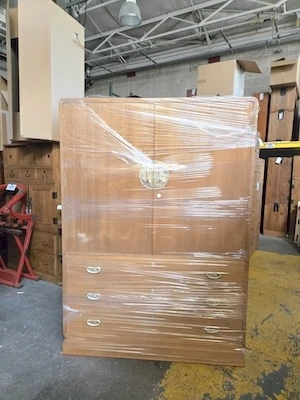
Each piece is carefully inspected, cleaned, and wrapped with protective plastic wrap.
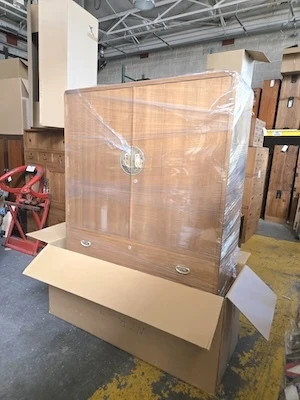
Styrofoam padding is placed at the bottom of the box, and the tansu is carefully positioned on top.
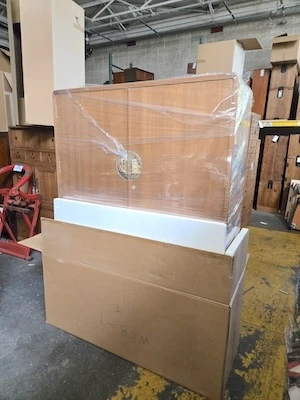
Additional Styrofoam is added around the tansu to protect all sides.

The piece is fully surrounded with Styrofoam and enclosed securely in a box.

The boxed item is placed on a pallet and secured with poly banding straps for safe transport.
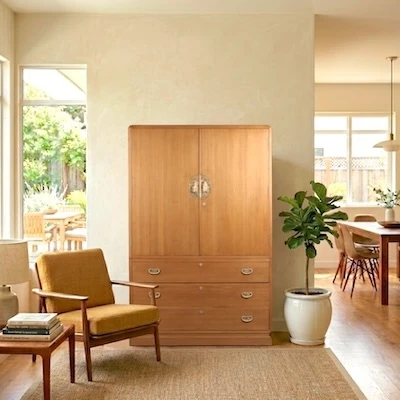
Arrives safely, ready to add warmth, history, and Japanese craftsmanship to your space.

A richly lacquered wooden fish drum from a Japanese Buddhist temple -- carved with two facing fish and gilded scale detail, complete with its original striker.
A mokugyo is a traditional Japanese Buddhist percussion instrument used in temples and home altars to keep the rhythm of sutra chanting during daily devotional practice. Carved from a single piece of hardwood into the form of two fish facing each other -- an ancient symbol of wakefulness and spiritual vigilance -- this example is finished in a deep cinnabar-red lacquer over the hollow resonating body, with the upper register rendered in glossy black lacquer. Gilded scale panels carved in relief accent each side of the body, while a small gilt boss marks the crown where the two fish heads meet. The slot opening at the base of the body and a second opening on the underside allow the struck dome to resonate with a clear, warm knock. This handcrafted Japanese Buddhist instrument represents a classic form produced by temple craft workshops during the Late Showa period, when demand for home altar goods remained strong across Japan.
Today the mokugyo makes a compelling living room accent or meditation room focal point, bringing the wabi-sabi aesthetic of Japanese temple craft into a modern interior. Displayed on a shelf or altar table, its bold red-and-black lacquer and sculptural fish form read as expressive decorative art -- an ideal gift for collectors of Japanese antiques, practitioners of Buddhism or mindfulness, or anyone drawn to Japandi style interiors. It can also be used as intended: a gentle rhythmic strike with the included mallet produces a mellow, grounding tone well suited to meditation or sound-healing practice at home.
A striking piece of Japanese antique Buddhist craft -- equal parts sacred instrument and sculptural living room accent -- that carries the resonance of temple tradition into any modern home.
We use professional studio lighting to highlight the natural character of the wood. As a result, the tone may appear slightly warmer than under natural daylight.
All vintage and antique items are sold as-is. Each piece may exhibit signs of age, including scratches, wear, or minor imperfections. These are not considered defects but natural evidence of the item’s authenticity and age.