


Antique Japanese Small Chest (Ko Tansu) — Kirinoki, 1920, Taisho Era (SKU: 25M-G317)
SKU: 25M-G317
Sold Out




 International Shipping Notice
 How We Pack Your Tansu
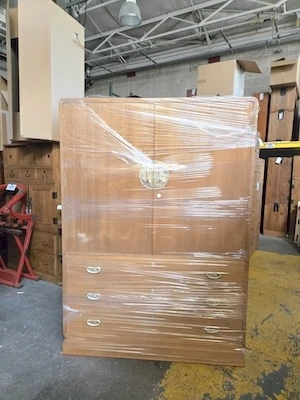
Each piece is carefully inspected, cleaned, and wrapped with protective plastic wrap.
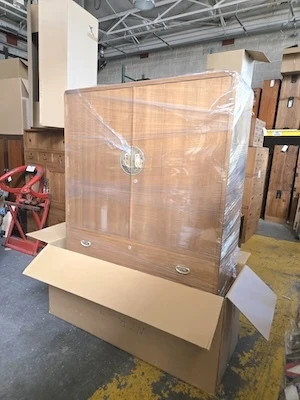
Styrofoam padding is placed at the bottom of the box, and the tansu is carefully positioned on top.
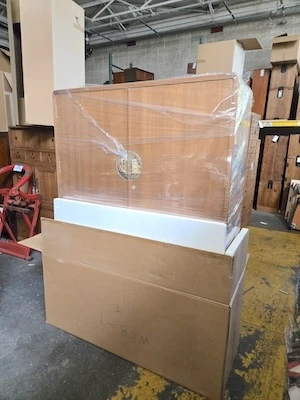
Additional Styrofoam is added around the tansu to protect all sides.
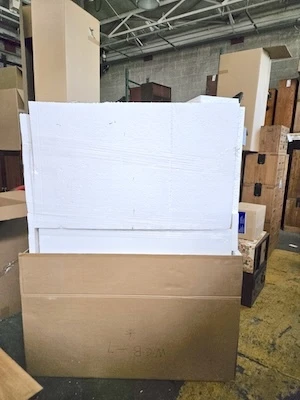
The piece is fully surrounded with Styrofoam and enclosed securely in a box.
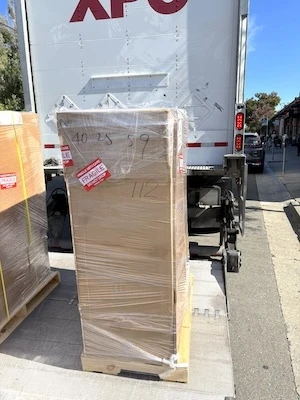
The boxed item is placed on a pallet and secured with poly banding straps for safe transport.
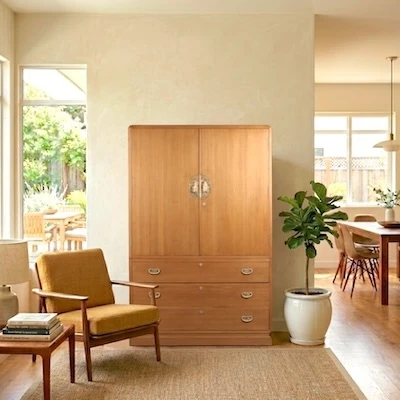
Arrives safely, ready to add warmth, history, and Japanese craftsmanship to your space.

Antique Japanese Small Chest (Ko-Tansu) With Kirinoki — 1920s, Taishō Era
A Graceful Companion of Everyday Elegance in Lightweight Kirinoki
This refined ko-tansu (small chest), crafted in the 1920s during Japan’s Taishō Era, captures the harmonious blend of form and function that defines traditional Japanese design. Made from Kirinoki (Paulownia wood)—a prized material known for its light weight, fire resistance, and smooth grain—this piece was likely cherished in a merchant’s home or used for storing personal valuables.
At the heart of its design are two sliding panel doors, flanked by seven drawers of various sizes. The drawers are fitted with original hand-forged iron pulls, their aged patina offering a beautiful contrast to the warm, honeyed tone of the wood. A single drawer retains its keyhole plate, once used to protect essential documents or treasured items.
Despite its compact size, the chest exudes a quiet authority. It’s perfect for use as an accent cabinet, a jewelry or keepsake box, or simply as a display of Japanese craftsmanship and history.
Origin: Japan
Era: 1920s, Taishō Period
Material: Kirinoki (Paulownia Wood)
Color: Light natural brown with dark iron hardware
Dimensions: 23 3/4”W x 12”D x 19”H
Condition: Excellent antique condition with gentle wear consistent with age
A timeless storage piece that honors the beauty of simplicity—light in weight, rich in soul.
All vintage and antique items are sold as-is. Each piece may exhibit signs of age, including scratches, wear, or minor imperfections. These are not considered defects but natural evidence of the item’s authenticity and
SKU: 25M-G317


SKU: 25M-G324
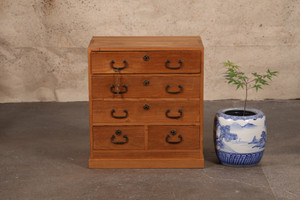

SKU: 25M-G300

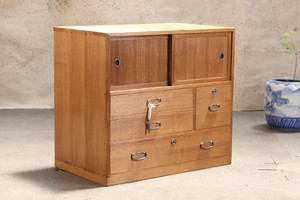
SKU: 25M-G305
