






 International Shipping Notice
 How We Pack Your Tansu
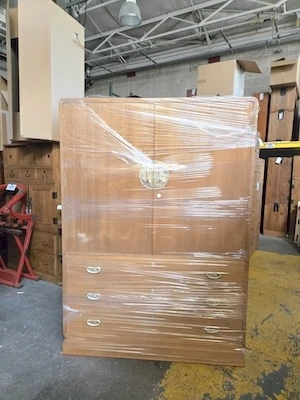
Each piece is carefully inspected, cleaned, and wrapped with protective plastic wrap.
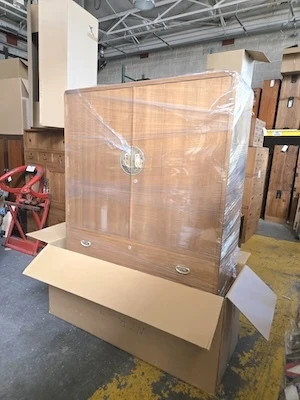
Styrofoam padding is placed at the bottom of the box, and the tansu is carefully positioned on top.
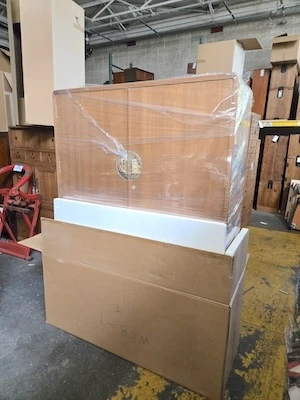
Additional Styrofoam is added around the tansu to protect all sides.
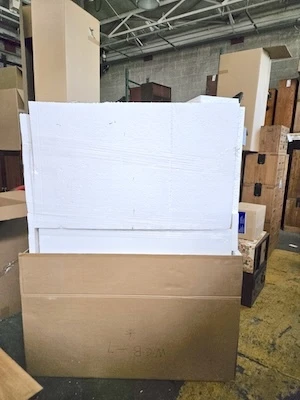
The piece is fully surrounded with Styrofoam and enclosed securely in a box.

The boxed item is placed on a pallet and secured with poly banding straps for safe transport.
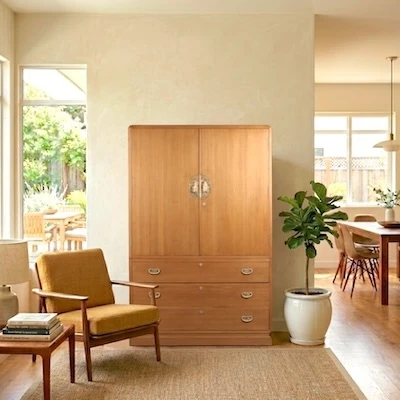
Arrives safely, ready to add warmth, history, and Japanese craftsmanship to your space.

Antique Japanese Shoin Door Set — Wood, 1920s, Taishō Era (SKU 25M-441-6)
Where mountains rise and cranes drift across the silence
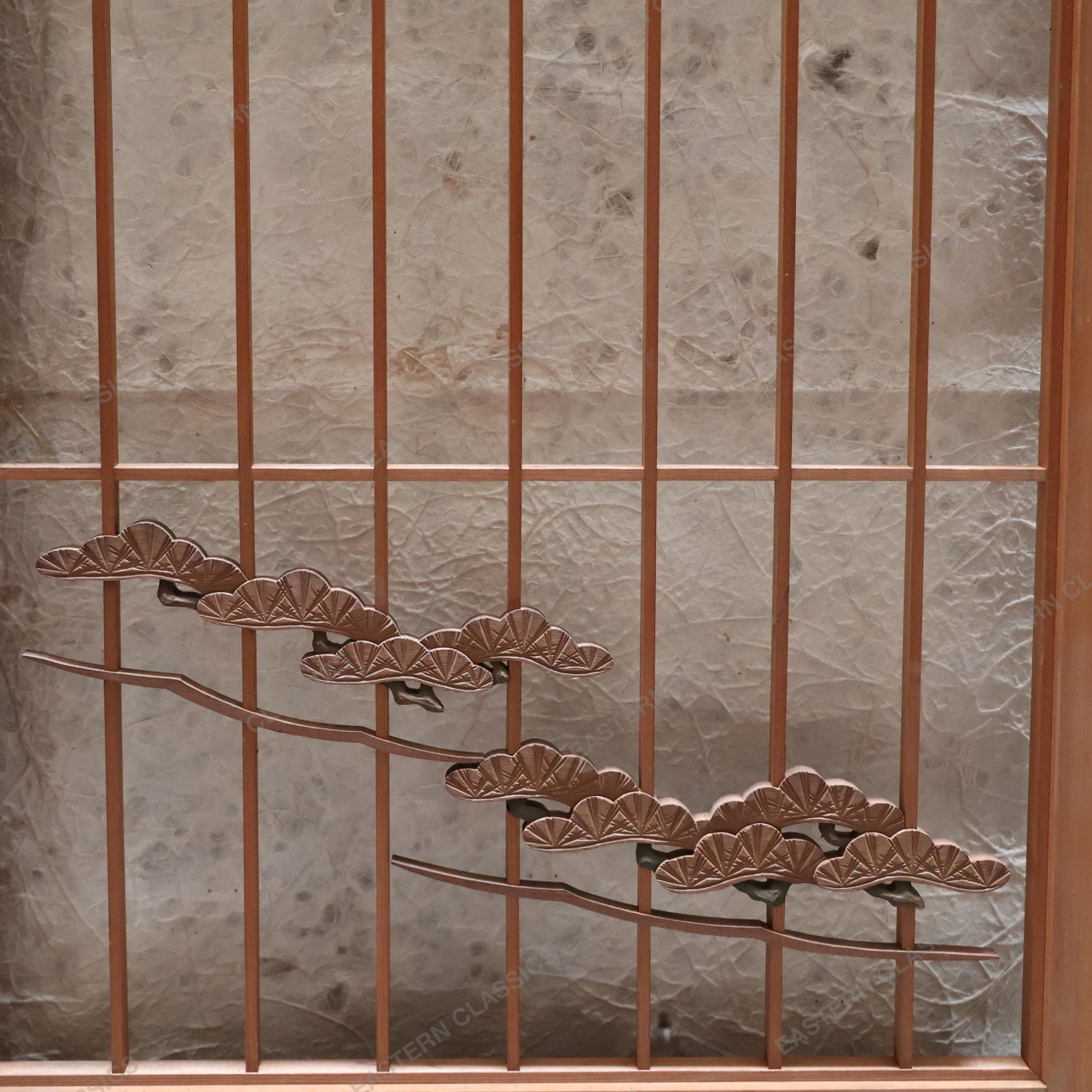
This exquisite set of antique shoin doors from the Taishō era offers more than architectural beauty—it invites the spirit of nature indoors. Handcrafted in the early 20th century, each panel is a lyrical composition, depicting soaring cranes, a distant Mt. Fuji, and a cascade of pine-covered hills. The slender vertical slats (kumiko) act as a canvas, framing the delicate negative space with quiet intention.
Traditionally used in the shoin-zukuri style of Japanese architecture, these transom doors once separated inner chambers while allowing filtered light to pass through. The artistry of the carved landscape was not merely decorative—it was philosophical, evoking seasonal change, spiritual stillness, and the fleeting nature of life. Whether displayed as wall art, installed as sliding panels, or admired in a contemporary fusion interior, this set carries the grace of wabi-sabi into any space it inhabits.
Origin: Japan
Era: Taishō period (circa 1920s)
Material: wood
Use: Shoin-style ranma or fusuma sliding doors, for architectural division or decorative installation
Features: Four-panel set; hand-carved Mt. Fuji, cranes in flight, and pine trees; slender kumiko slats; natural wood patina
Dimensions: 17"W x 41"H (Each)
Condition: Good antique condition; minor surface wear consistent with age and previous installation
A poetic threshold between worlds—where carved wood becomes wind, and silence becomes a view.


