Antique Japanese Ko Tansu Chest, Taisho Era (1912-1926) | SKU: 26J-G042-2
Rest. & Insp. by: Fukutsuka in Japan
SKU: 26J-G042-2
Sold Out



 International Shipping Notice
 How We Pack Your Tansu
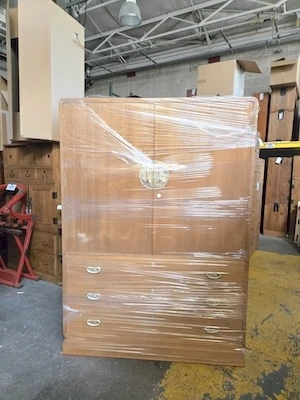
Each piece is carefully inspected, cleaned, and wrapped with protective plastic wrap.
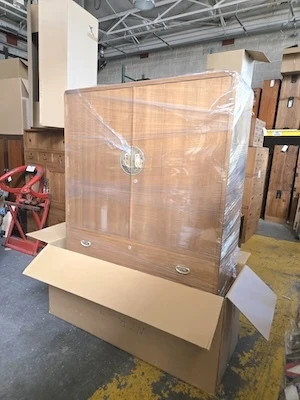
Styrofoam padding is placed at the bottom of the box, and the tansu is carefully positioned on top.
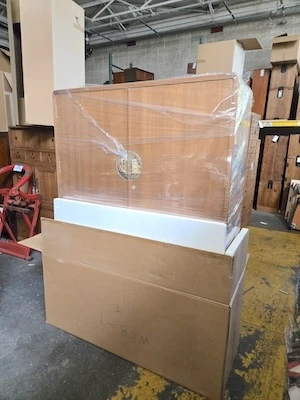
Additional Styrofoam is added around the tansu to protect all sides.
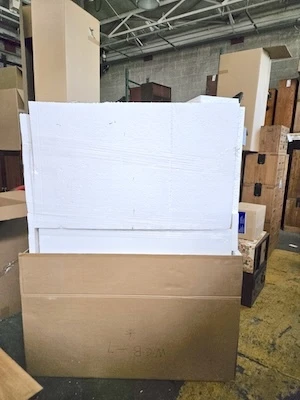
The piece is fully surrounded with Styrofoam and enclosed securely in a box.
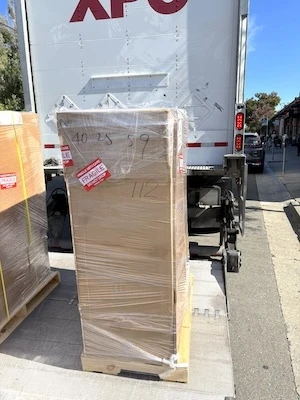
The boxed item is placed on a pallet and secured with poly banding straps for safe transport.
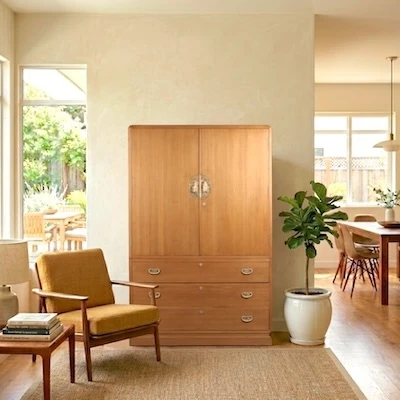
Arrives safely, ready to add warmth, history, and Japanese craftsmanship to your space.

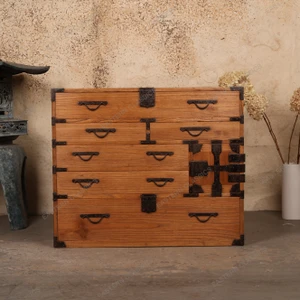
A compact merchant-style tansu with asymmetric drawers, ornate iron lock hardware, and a boldly brushed side inscription -- a rare surviving piece of handcrafted Japanese antique furniture.
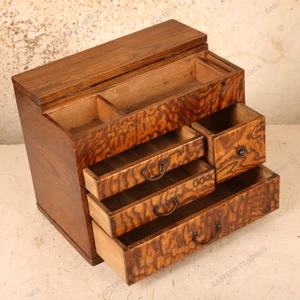
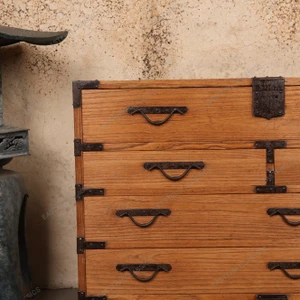
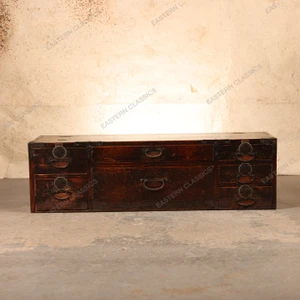
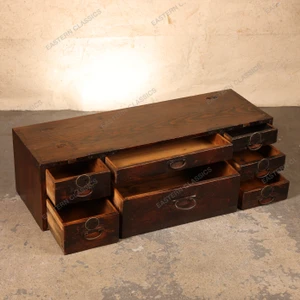
A ko-dansu is a small Japanese storage chest, traditionally used in merchant households and commercial settings to organize documents, records, and valuable goods within easy arm's reach. This Taisho-era example displays the sturdy, no-nonsense construction that defined Japanese antique furniture of the period -- warm-toned wood boards, likely a straight-grained Japanese softwood such as sugi (cryptomeria), are joined with visible hand craftsmanship and reinforced at every corner and edge with iron strap fittings and corner brackets. The front face is arranged in an asymmetric layout of multiple drawers varying in width and height, each fitted with cast iron D-ring drop handles that have developed a rich dark patina over a century of use. Select drawers feature decorative iron hasp lock plates with ornate scroll detailing and keyhole escutcheons -- a hallmark of quality ko-dansu made for securing valuables. The side panel carries a large, confident brush inscription in Japanese characters, consistent with an institutional lot or inventory marking, adding a layer of provenance and historic character that no reproduction could replicate.
Today this ko-dansu translates effortlessly into a modern home. At roughly two feet wide and under knee height, it works beautifully as a bedroom nightstand with ample drawer storage for books, accessories, and personal items -- its warm wood tones and iron hardware sitting naturally within a Japandi style or wabi-sabi aesthetic. In a home office it becomes a distinctive desktop organizer or credenza side unit, keeping stationery, cables, and small supplies sorted in style. It also makes a striking entryway furniture piece -- keys, mail, and everyday essentials tucked neatly into its many drawers while the flat top surface holds a small tray or vase. A truly unique housewarming gift or gift for collectors of antique Japanese craft, this piece carries over a hundred years of working history into whatever space it inhabits.
A century-old piece of handcrafted Japanese antique furniture that brings the quiet authority of Taisho-era craft into any modern bedroom, office, or entryway.
We use professional studio lighting to highlight the natural character of the wood. As a result, the tone may appear slightly warmer than under natural daylight.
All antique items are sold as-is. Each piece may exhibit signs of age, including scratches, wear, or minor imperfections. These are not considered defects but natural evidence of the item’s authenticity and age.
Rest. & Insp. by: Fukutsuka in Japan
SKU: 26J-G042-2


Rest. & Insp. by: Harada in Japan
SKU: 26J-0403