






 International Shipping Notice

Weathered stone kaeru (frog) sculpture for a traditional Japanese garden or entryway
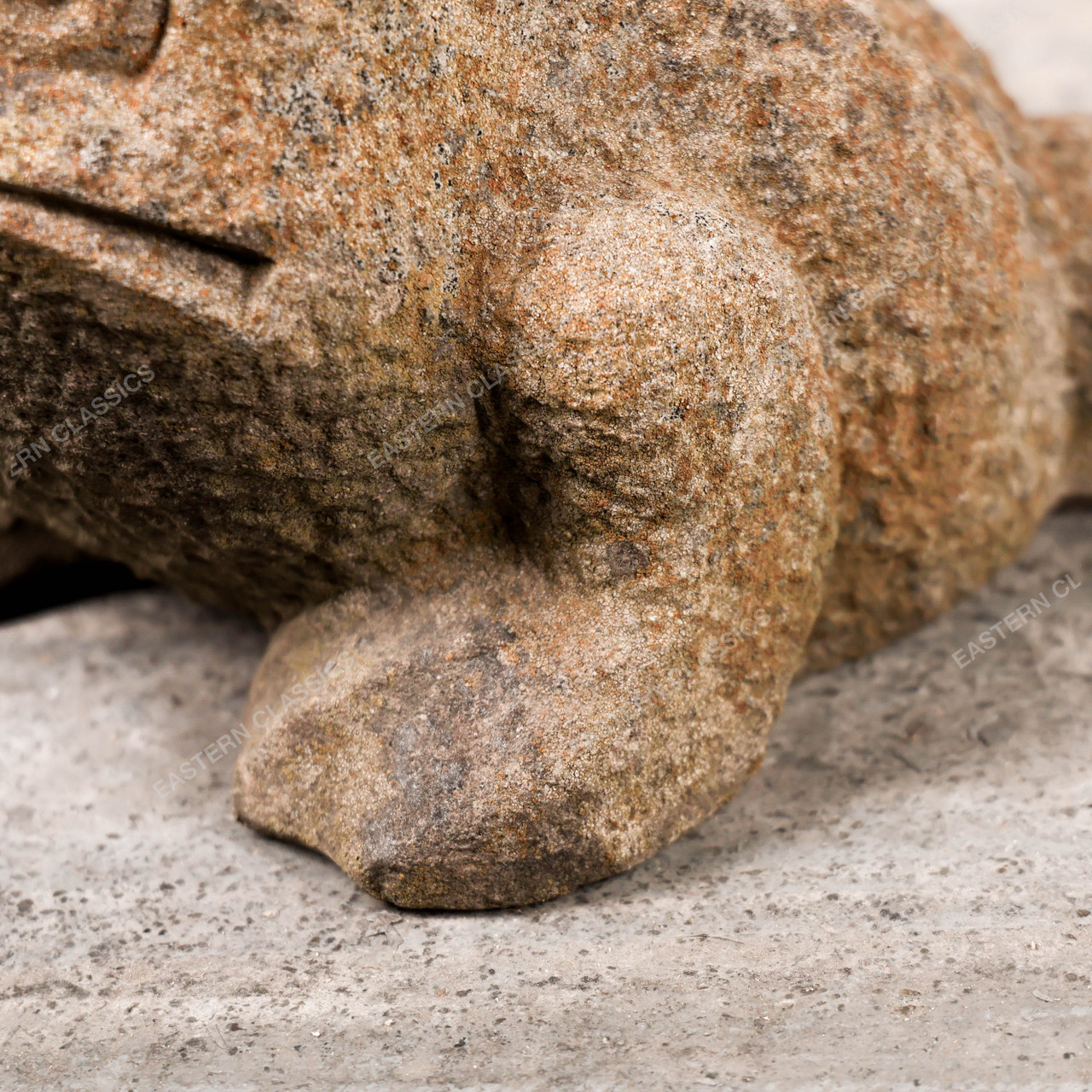
This solid stone frog, or kaeru, is hand-carved in a charmingly stylized form with a broad back, squat legs, and a simple, almost abstract face. The surface has developed a rich, natural patina of age, with scattered lichen and color variation that speaks to years spent outdoors, making it an ideal accent for a Japanese garden, tsubo-niwa, or wabi-sabi inspired interior.
In Japan, the frog is a beloved symbol of safe returns and prosperity—“kaeru” meaning both “frog” and “to return.” Placed near an entrance, pathway, or water feature, this antique garden ornament would have served as a quiet guardian, inviting good fortune back to the home. Its compact, low-slung profile allows it to sit naturally among stones, plants, or on a veranda, adding subtle character without overpowering the space.
A characterful Taishō-era stone frog that brings quiet charm and auspicious symbolism to any Japanese-style setting.
We use professional studio lighting to highlight the natural character of the wood. As a result, the tone may appear slightly warmer than under natural daylight.
All vintage and antique items are sold as-is. Each piece may exhibit signs of age, including scratches, wear, or minor imperfections. These are not considered defects but natural evidence of the item’s authenticity and age.


